
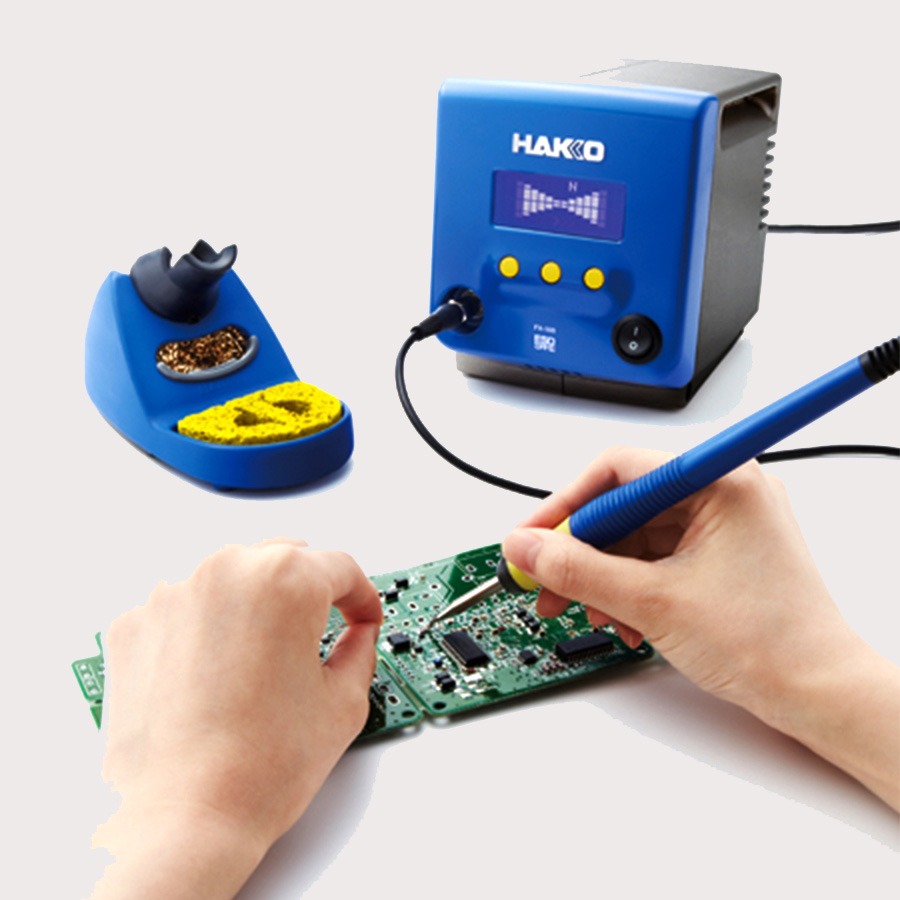
In electronics manufacturing, even a small variation in soldering temperature can affect the quality of a finished product. A solder joint that looks acceptable at first may develop problems later if the temperature was too low, too high, or inconsistent during the process. This is why checking the actual temperature of a soldering iron is an important part of equipment maintenance and quality control.
Soldering station calibration helps manufacturers verify whether the temperature displayed on a station matches the actual temperature at the soldering tip. Over time, factors such as tip condition, heater performance, replacement parts, and regular use can influence temperature readings. Without periodic checks, operators may continue working with incorrect temperature settings without realising it.
For electronics manufacturers, PCB assembly teams, repair centres, and industrial maintenance departments, regular temperature verification supports consistent soldering results. It also helps identify equipment issues before they affect a larger batch of products.
In this guide, we will explain what soldering station calibration involves, why it matters, how temperature checks are performed, and which tools can help maintain reliable soldering performance.
What Is Soldering Station Calibration?
Soldering station calibration is the process of checking the actual temperature of a soldering iron tip against the temperature set on the station. If the measured temperature differs from the displayed setting, the station may need an adjustment or temperature offset, depending on its design.
For example, an operator may set a soldering station to 350°C, but a suitable temperature measuring instrument may show that the tip is reaching only 330°C. This difference can affect how quickly solder melts and how efficiently heat transfers to the joint.
Calibration and temperature verification are closely related, but they are not exactly the same. Verification identifies whether the equipment is operating within the required limits, while adjustment corrects an identified difference where the equipment supports it. Formal calibration may also involve a documented comparison with a traceable reference and a stated measurement uncertainty.
The exact procedure depends on the soldering station model, the measuring instrument, and the manufacturer’s instructions. Some modern stations support automatic temperature correction when connected to a compatible soldering tester. Others require the operator to enter an offset manually.
For this reason, soldering station calibration should be treated as a controlled maintenance activity rather than simply changing the displayed temperature until the soldering process appears satisfactory.
Why Is Soldering Station Calibration Important?
Temperature control directly affects the way solder melts, wets component leads, and forms a reliable connection with a PCB pad. If the temperature is not suitable for the application, operators may experience poor wetting, inconsistent joints, or unnecessary heat exposure.
A temperature that is too low may require the operator to hold the iron against the joint for longer. This can increase production time and expose the component or board to prolonged heating. On the other hand, excessive temperature can accelerate tip wear, damage sensitive components, and increase oxidation.
Regular soldering station calibration helps production teams identify these problems before they become recurring quality issues. It also gives supervisors a clearer basis for checking equipment performance across different workstations and shifts.
There are several practical benefits of maintaining accurate temperature control:
- Consistent solder joints: Operators can work with greater confidence that the selected temperature is appropriate for the task.
- Reduced rework: Detecting temperature differences can help prevent defects caused by unsuitable heat conditions.
- Longer tip life: Avoiding unnecessarily high temperatures can reduce thermal stress and oxidation.
- Better process control: Recorded measurements make it easier to compare equipment performance over time.
- Support for quality procedures: Documented checks can help demonstrate that temperature-controlled equipment is being maintained according to internal requirements.
Calibration alone cannot guarantee a perfect solder joint. Tip selection, solder alloy, flux, component geometry, operator technique, and the thermal characteristics of the PCB also matter. However, accurate temperature measurement removes one important source of uncertainty from the process.
How to Perform Soldering Station Calibration
The calibration procedure varies by equipment model, so operators should always follow the relevant instruction manual. A typical process involves preparing the station, measuring the tip temperature, comparing the result with the set temperature, and making a correction when necessary.
1. Prepare the soldering station
Check that the station, handpiece, cable, and soldering tip are in good condition. Confirm that the tip is clean and properly installed, with no obvious damage or excessive oxidation.
Switch on the station and allow it to reach the selected temperature. Follow the manufacturer’s recommended preparation and stabilisation procedure before taking a measurement.
2. Use a suitable temperature measuring instrument
A dedicated soldering tip thermometer or soldering iron tester is generally suitable for measuring tip temperature. The instrument should be appropriate for the expected temperature range and have a current calibration status.
For example, HAKKO’s FG-100B thermometer is designed for soldering tip temperature measurement. Its automatic hold function helps standardise readings by holding the measurement when the temperature stabilises. The FG-101B tester can also measure tip temperature, leakage voltage, and tip-to-ground resistance. HAKKO FG-100B and FG-101B
3. Measure the actual tip temperature
Place the soldering tip against the measuring sensor according to the tester’s instructions. Use the recommended contact position and measurement method, as inconsistent positioning can affect the result.
Wait for the reading to stabilize and record the measured temperature. For repeatable results, use the same measurement method, sensor arrangement, and preparation procedure each time.
4. Compare the readings
Compare the measured temperature with the station’s set temperature. If the station is set to 350°C and the tester reads 345°C, the difference is 5°C.
Whether this difference is acceptable depends on the equipment specification and the process requirements. Do not assume that every soldering station should meet the same tolerance.
5. Adjust the temperature if required
If the reading falls outside the permitted range, check the tip, sensor condition, and measurement method first. If the difference remains, use the station’s adjustment or calibration function where available.
Some models allow an offset to be entered manually, while compatible advanced systems can receive measurement data from a tester and correct the temperature automatically. After adjustment, measure the tip again to confirm the result.
6. Record the results
Maintain a record of the equipment identification, date, set temperature, measured temperature, correction made, and final result. Include the measuring instrument’s identification and relevant calibration status where required by your quality procedure.
These records help identify repeated temperature deviations and support decisions about servicing, tip replacement, or equipment retirement.
Common Signs That a Soldering Station Needs Calibration
A soldering station may continue to power on and display a temperature even when its actual performance has changed. This makes periodic measurement important, particularly in production environments where several operators use the same equipment.
One warning sign is a change in soldering behaviour. If solder takes longer to melt or joints look different despite using the same materials and settings, temperature accuracy may be worth checking.
Another sign is inconsistent performance between stations. Two stations set to the same temperature may produce different results because of variations in tip condition, heater performance, or temperature control.
Operators should also pay attention when a handpiece, heater, or soldering tip has been replaced. Different tip geometries can influence heat transfer and measured tip temperature, so the station may require a fresh check after maintenance.
Other signs include repeated rework, visible tip oxidation, unstable readings, or temperature fluctuations during operation. These symptoms do not automatically mean that calibration is the problem. A worn heater, unsuitable tip, damaged connection, or poor thermal contact may also be responsible.
When an issue appears, check the equipment systematically instead of increasing the temperature immediately. An unnecessarily high setting can hide one problem while creating another.
How Often Should Soldering Station Calibration Be Done?
There is no single calibration interval that suits every soldering station or production environment. The right frequency depends on the manufacturer’s recommendations, how often the equipment is used, the required process tolerance, and the consequences of a temperature-related defect.
In a high-volume electronics manufacturing facility, frequent temperature checks may be appropriate because stations are used continuously and even small variations can affect many assemblies. A repair workshop with occasional soldering work may follow a different schedule.
A practical maintenance plan can include daily or shift-start verification where the process requires it, periodic documented calibration, and additional checks after maintenance or unusual temperature behaviour. These are examples of possible controls, not universal requirements.
Manufacturers should also consider the stability of the measuring instrument. HAKKO specifies that its FG-100B and FG-101B measuring instruments should themselves be calibrated regularly. An unreliable reference instrument can produce misleading results even when the checking procedure is followed correctly.
The most useful approach is to establish an interval based on risk and actual equipment history. If records show repeated deviations, shorten the interval or investigate the cause. If equipment remains stable, the organisation can review the interval through its documented quality process without ignoring manufacturer requirements.
Essential Tools for Soldering Station Calibration
Accurate measurement depends on using the right equipment. A station’s own display is useful for setting the temperature, but an independent measuring instrument is needed to verify the actual tip temperature.
A dedicated soldering tip thermometer is one of the most common tools for this task. It measures the temperature at the tip and allows operators to compare the result with the station’s set value.
A soldering iron tester can provide additional checks. Depending on the model, it may measure leakage voltage and tip-to-ground resistance alongside temperature. These checks are relevant to the electrical safety and grounding performance of soldering equipment used for electronic assemblies.
For example, Sumitron lists the HAKKO FG-102 thermometer and FG-101B and FG-100B soldering testers in its product range. The FG-102 measures tip temperature over a specified range of 0–700°C, while the FG-100B has a specified temperature measurement accuracy of ±3°C between 300°C and 600°C and ±5°C outside that range. These are instrument specifications, not guarantees of the overall accuracy of every measurement setup. Sumitron’s soldering tester range and HAKKO FG-100B specifications.
Advanced soldering stations may also offer automatic temperature correction and computer-based recording. These features can reduce manual data entry and help maintain traceable records, particularly where many workstations must be monitored.
The choice of equipment should depend on the station model, measurement requirements, production volume, and the level of documentation required by the organisation.
Best Practices for Maintaining Temperature Accuracy
Calibration is most effective when it forms part of a wider equipment maintenance routine. Regular checks help detect temperature differences, but everyday handling also affects how reliably a station performs.
Start by selecting the correct soldering tip for the component and joint. A tip that is too small for a large thermal load may transfer heat inefficiently, even if the measured idle temperature is correct.
Keep tips clean and properly tinned according to the manufacturer’s instructions. Excessive oxidation can interfere with heat transfer and make the soldering process less predictable. Replace worn or damaged tips instead of compensating for them with higher temperature settings.
Use the soldering temperature recommended by the solder, component, and process specifications. Lead-free soldering may require different process conditions from traditional lead-based soldering, but the correct temperature depends on the materials and joint design rather than the alloy alone.
Keep measurement records up to date and ensure operators know how to use the temperature tester correctly. Consistent measurement techniques make results more comparable across different shifts and workstations.
Finally, investigate recurring deviations instead of repeatedly applying offsets. If a station cannot maintain its specified performance, maintenance or repair may be necessary.
Choosing the Right Soldering Equipment for Your Application
Calibration is only one part of achieving dependable soldering results. The station itself must also suit the components, board design, and workload involved in the application.
For fine-pitch components and precision electronics work, temperature control and tip selection are especially important. Higher-power stations may be better suited to large copper areas, multilayer boards, or other applications that demand greater heat delivery.
Sumitron offers a range of soldering and desoldering equipment, including HAKKO soldering stations, rework systems, and temperature measuring instruments. For example, the HAKKO FX-888DX is a temperature-controlled soldering station, while the FX-805 supports automatic calibration or offset correction using compatible HAKKO testers. These products serve different requirements, so the right choice depends on the application. Explore Sumitron’s soldering stations.
Before selecting equipment, consider the required temperature range, thermal recovery, compatible handpieces, tip availability, measurement needs, and recordkeeping requirements. It is also worth checking whether the station supports automatic correction if your production process requires frequent, documented temperature checks.
For help identifying suitable soldering equipment or temperature measurement tools, visit Sumitron and review the available product information.
Frequently Asked Questions (FAQs)
Q1. What is soldering station calibration?
Soldering station calibration involves comparing the actual soldering tip temperature with the station’s set temperature and determining whether the difference is within the required limits. Where supported, an adjustment can correct an identified deviation.
Q2. Why is soldering station calibration necessary?
It helps maintain temperature accuracy, supports consistent solder joints, and identifies equipment problems before they cause repeated defects. It also provides measurement records for quality control.
Q3. Which instrument is used for soldering station calibration?
A dedicated soldering tip thermometer or soldering iron tester is commonly used. Suitable instruments include the HAKKO FG-100B thermometer and FG-101B soldering tester.
Q4. How do I check the temperature of a soldering iron?
Set the station to the required temperature, allow it to stabilise, and measure the tip using a suitable thermometer or tester according to the manufacturer’s instructions. Compare the result with the set temperature and the permitted tolerance.
Q5. How frequently should a soldering station be calibrated?
The interval depends on equipment usage, process requirements, manufacturer recommendations, and previous measurement results. Some environments also require routine checks at the beginning of a shift or working day.
Q6. What happens if a soldering station has an incorrect temperature?
Incorrect temperature can contribute to poor wetting, inconsistent solder joints, longer soldering times, or excessive heat exposure. The impact depends on the size of the deviation and the application.
Q7. What is the difference between calibration and temperature adjustment?
Calibration establishes how the measured temperature compares with a reference and documents the result. Adjustment changes the equipment’s settings or correction value to reduce the difference. Verification checks whether the equipment meets specified requirements.
Q8. Can I calibrate a soldering station without a thermometer?
You can inspect the station’s settings and observe soldering performance, but these checks do not reliably establish the actual tip temperature. A suitable, properly maintained measuring instrument is needed for meaningful temperature verification.
Q9. Does changing a soldering tip affect temperature accuracy?
Yes, changing the tip can affect heat transfer and the measured temperature because tip shape, size, condition, and sensor arrangement influence thermal performance. Check the temperature after replacing a tip when required by the equipment or process procedure.
Q10. Where can I find soldering calibration equipment in India?
Sumitron offers soldering stations and soldering temperature measurement equipment, including HAKKO products. You can review its soldering equipment range and thermometers and soldering testers to identify options for your application.
Conclusion
Soldering station calibration helps maintain temperature accuracy, improve solder joint consistency, and reduce the risk of production defects. Regular temperature verification, proper equipment maintenance, and accurate measurement records support reliable soldering performance in electronics manufacturing.
Sumitron offers HAKKO soldering stations, thermometers, and soldering testers to help businesses meet their soldering and temperature measurement requirements. Choosing the right equipment depends on your application and testing needs.
Read Also This Blog


[…] Soldering Station Calibration: Why It Matters and How to Do It Correctly […]