
Static electricity may seem harmless in everyday situations, but it can cause serious problems when working with sensitive electronic components. A small electrostatic discharge can damage integrated circuits, printed circuit boards (PCBs), and other electronic parts without leaving any visible sign of damage. In manufacturing environments, these issues can lead to product failures, additional inspection costs, and unnecessary rework.
An ESD tester helps businesses check whether their static control equipment is working as intended. It can be used to test wrist straps, ESD footwear, and other components of an electrostatic discharge control programme, depending on the type of equipment selected.
For electronics manufacturers, PCB assembly units, repair facilities, and quality control teams, regular ESD testing is an important part of maintaining a controlled working environment. Understanding the available testing equipment and its applications helps businesses make informed decisions about protecting sensitive products.
What Is an ESD Tester?
An ESD tester is a testing device used to evaluate specific electrical properties associated with electrostatic discharge (ESD) protection. Depending on its design, it may check the electrical resistance of a wrist strap, verify an operator’s grounding path, assess ESD footwear, or measure the resistance of a work surface.
The main purpose of an ESD tester is to identify potential problems in static control arrangements before they affect sensitive electronic components. For example, a wrist strap may appear to be in good condition but could have a damaged cord or a poor electrical connection. A suitable tester can help identify such issues.
ESD testers are used in electronics manufacturing plants, laboratories, PCB assembly facilities, cleanrooms, and repair stations. The specific device required depends on what needs to be tested and the procedures followed at the workplace.
It is important to understand that not every ESD tester performs the same function. A wrist strap tester cannot replace a surface resistance meter, and a footwear tester may not provide all the measurements required to assess a complete ESD-protected workstation.
Why Is an ESD Tester Important in Electronics Manufacturing?
Electronic components can be sensitive to electrostatic discharge even when the discharge is too small for a person to notice. Damage may occur immediately or create latent defects that become apparent only after a product has been used for some time.
An ESD tester helps manufacturers check the performance of their static control measures instead of relying only on visual inspections. This is particularly useful in production environments where employees handle PCBs, semiconductors, integrated circuits, and other sensitive parts throughout the day.
1. Helps Protect Sensitive Electronic Components
Testing personnel grounding equipment can help identify problems that may allow static charge to reach sensitive products. This supports the broader ESD protection programme used in electronics manufacturing.
2. Reduces the Risk of Production Defects
A faulty wrist strap or unsuitable footwear may compromise an otherwise well-equipped workstation. Regular testing helps identify these problems so corrective action can be taken before they contribute to product defects.
3. Supports Quality Control Procedures
Manufacturers can incorporate ESD testing into employee entry procedures, routine inspections, and equipment verification schedules. Recorded results can also help quality teams identify recurring issues and review their existing processes.
4. Helps Maintain Workplace ESD Controls
ESD protection involves more than wearing a wrist strap. Grounding arrangements, flooring, work surfaces, packaging, and employee practices may all require attention. Appropriate testing equipment helps verify individual parts of this system.
The effectiveness of testing depends on using the correct instrument, following the manufacturer’s instructions, and applying the relevant procedures. An ESD tester supports static control, but it does not replace a complete ESD control programme.
How Does an ESD Tester Work?
The working principle of an ESD tester depends on the property being measured. Some instruments measure electrical resistance, while others check whether a grounding path falls within configured limits.
A wrist strap tester, for example, checks the electrical path through the wristband and connecting cord. The operator wears the wrist strap, connects it to the tester as instructed, and initiates the test. The device then indicates whether the measured resistance is within its configured acceptance range.
Footwear testers work differently. They assess the electrical resistance associated with ESD footwear or foot grounders. Depending on the model, an operator may stand on conductive plates and activate the test to obtain a result.
Surface resistance meters are used to assess the electrical resistance of materials such as ESD mats, work surfaces, and certain flooring materials. These measurements require the appropriate electrodes, test setup, and measurement procedure.
The result should always be interpreted according to the equipment’s specifications and the applicable ESD requirements. A pass indication confirms only that the tested parameter meets the configured criteria; it does not establish that every part of the workstation is functioning correctly.
What Are the Different Types of ESD Testers?
Different workplaces require different testing methods. Choosing the right ESD tester starts with identifying the equipment, materials, or personnel grounding arrangements that need to be checked.
1. Wrist Strap Tester
A wrist strap tester checks whether an operator’s wrist strap and its associated connection provide an acceptable electrical path. It is commonly used in PCB assembly, electronic component handling, repair stations, and other areas where employees work directly with ESD-sensitive products.
Some models are designed for standalone testing before work begins, while continuous monitoring systems check grounding during operations. These systems serve different purposes and should not be treated as interchangeable.
2. Footwear Tester
An ESD footwear tester checks the electrical resistance of footwear or foot grounders used as part of a personnel grounding system. It is relevant in facilities where employees use ESD footwear together with suitable flooring.
Testing may be performed at designated entry points or other locations specified by the facility’s procedures. The acceptance criteria should account for the footwear, floor system, and applicable ESD programme requirements.
3. Combined Wrist Strap and Footwear Tester
A combined tester allows users to check wrist straps and footwear using one device. Depending on the model, it can help reduce the need for separate testing stations and simplify routine checks.
For facilities where employees move between different ESD-controlled areas, a combined tester may be useful when the testing arrangement matches the site’s operational requirements.
4. Surface Resistance Meter
A surface resistance meter measures electrical resistance associated with materials such as ESD work surfaces, flooring, and other static control materials. It helps determine whether these materials meet the specified electrical requirements.
This equipment is particularly relevant during installation checks, routine maintenance, product evaluation, and quality inspections. The correct measurement method and electrode arrangement are important for obtaining meaningful results.
5. Electrostatic Field Meter
An electrostatic field meter measures the electric field near a charged object and can help estimate its surface voltage under suitable measurement conditions. It is useful for locating potential static charge sources and investigating ESD-related concerns.
Unlike a wrist strap tester, it does not directly confirm whether an operator’s grounding system is functioning correctly. The two instruments address different aspects of static control.
Key Applications of ESD Testing Equipment
ESD testing equipment is used across industries where electrostatic discharge can affect product reliability, manufacturing quality, or sensitive electronic assemblies.
- Electronics and PCB Assembly: During PCB assembly, operators may handle integrated circuits, connectors, microcontrollers, and other sensitive components. Wrist strap testers and suitable footwear testers help verify personnel grounding arrangements before work begins.
- Semiconductor Manufacturing: Semiconductor devices can be highly sensitive to electrostatic discharge. ESD testing forms part of the wider control procedures used to protect devices during handling, assembly, inspection, and packaging.
- Electronic Repair and Maintenance: Repair technicians regularly handle circuit boards and electronic assemblies that may be vulnerable to static discharge. Appropriate grounding checks and ESD-safe workstations help reduce avoidable risks during diagnostic and repair work.
- Cleanrooms and Controlled Production Areas: Certain cleanrooms and controlled manufacturing areas use ESD footwear, specialised flooring, and other static control measures. Testing equipment helps verify the relevant properties of these controls as part of established operating procedures.
- Quality Assurance and Testing Laboratories: Quality teams use ESD testing instruments to assess materials, investigate failures, and maintain inspection records. Surface resistance measurements, for example, can help evaluate whether a work surface or flooring material meets its specified requirements.
How to Choose the Right ESD Tester for Your Business
Selecting an ESD tester requires more than comparing prices or choosing a device with several functions. The equipment must match the measurements your facility needs to perform and the procedures your team follows.
1. Identify What Needs to Be Tested
Start by listing the equipment and materials that require verification. If the priority is checking employees’ wrist straps, a wrist strap tester may be sufficient. If both wrist straps and ESD footwear need to be checked, a combined tester may be more practical.
For work surfaces and flooring, consider a suitable surface resistance meter instead. Clearly defining the testing requirement helps prevent unnecessary purchases.
2. Check the Required Testing Parameters
Review the electrical resistance ranges, acceptance limits, test voltage, and other specifications relevant to your application. These requirements should align with the applicable standards and your organisation’s ESD control programme.
Avoid assuming that a tester is suitable simply because it displays a pass or fail result. The configured limits and test method must be appropriate for the item being tested.
3. Consider Daily Usage
A small repair station may need only occasional testing, while a high-volume production facility may require multiple testing points. Consider how many employees will use the equipment, how frequently checks are performed, and where the tester will be installed.
For regular entry checks, ease of operation and clear result indicators can help staff follow procedures consistently.
4. Review Data and Record-Keeping Features
Some testers offer identification, data storage, or result-recording functions. These features may be useful when a facility needs traceable records for audits, quality reviews, or internal monitoring.
If record-keeping is important, verify the actual capabilities of the selected model rather than assuming every tester includes these functions.
5. Check Maintenance and Calibration Requirements
Like other measurement instruments, ESD testing equipment must be maintained according to the manufacturer’s recommendations. Check whether the device requires periodic calibration or verification, and confirm that the relevant service support is available.
A defined maintenance schedule helps ensure that testing results remain dependable over time.
ESD Testing Solutions Available at Sumitron
Sumitron supplies industrial equipment and static control solutions for electronics manufacturing and related applications. Its ESD product range includes testing equipment intended for personnel grounding checks and surface resistance measurements.
Businesses can review the available models according to their specific requirements, whether they need a tester for routine employee checks or a meter for evaluating static control materials.
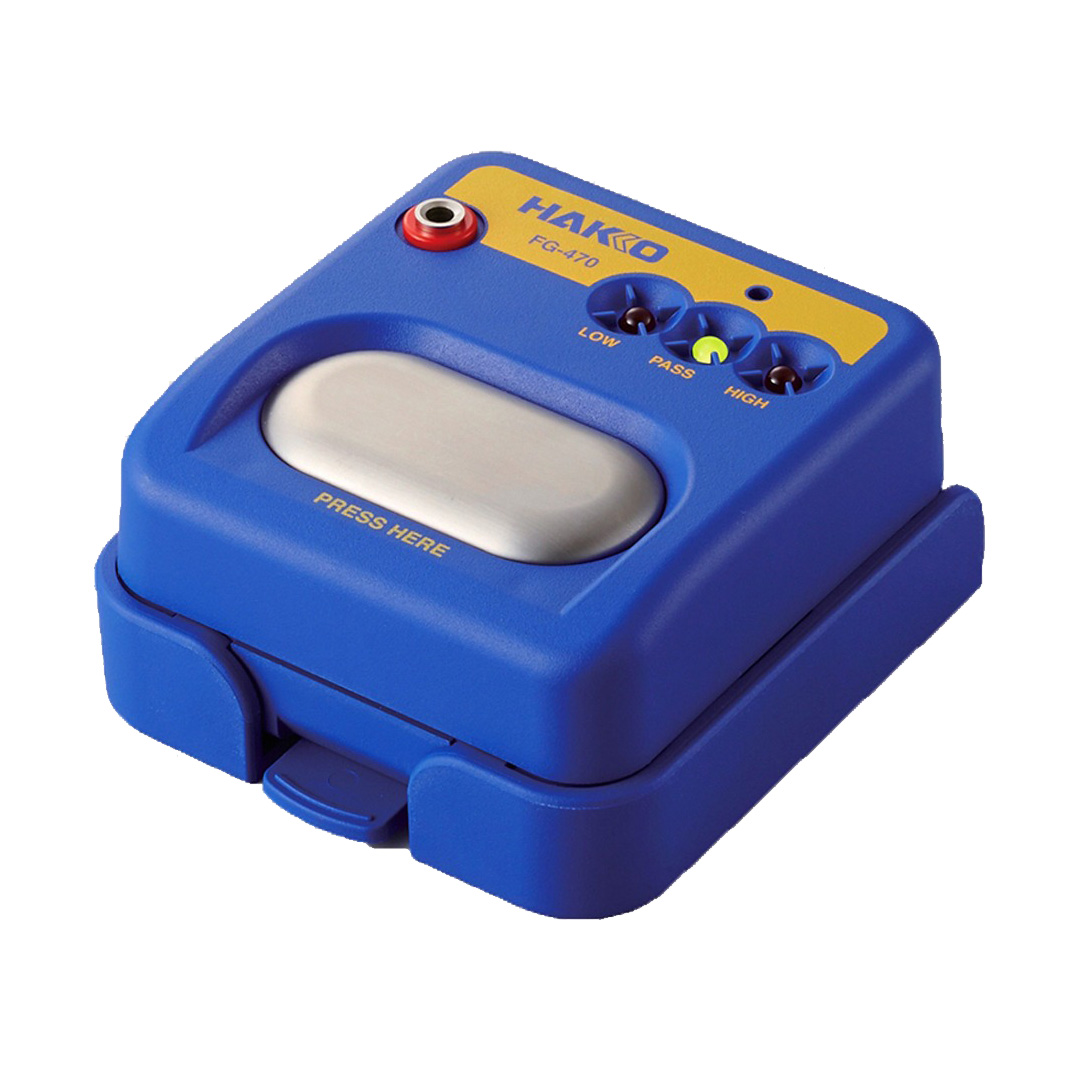
Hakko FG-470 Wrist Strap Tester
The Hakko FG-470 is listed by Sumitron as a wrist strap tester that can also test footwear. Its combined functionality can be useful for facilities that need to verify personnel grounding through wrist straps and ESD footwear.
It is worth considering for electronics workstations and production environments where these checks form part of the daily operating procedure. Before purchasing, confirm the model’s specifications, testing method, and compatibility with your site’s requirements.
Hakko FG-465 Double Plate Footwear Analyzer
The Hakko FG-465 Double Plate Footwear Analyzer is another product listed by Sumitron. It is designed to test footwear and can also support wrist strap testing in a combined configuration.
The product listing mentions data recording and personal identification features, which may be helpful for facilities that need to maintain employee testing records. Check the current product documentation for exact functionality and configuration details.
ESD Meters and Related Protection Products
Sumitron also lists ESD meters and other static protection products, including ESD mats and tiles. The appropriate combination depends on whether your priority is testing personnel grounding, measuring surface resistance, or establishing a broader static control arrangement.
You can review the available range on Sumitron’s ESD testing and protection page and its ESD protection product category.
Best Practices for Using an ESD Tester
An ESD tester provides useful information only when it is used correctly and consistently. Establishing a clear testing procedure helps employees understand when checks are required and what action to take when a result falls outside the acceptable range.
- Follow the manufacturer’s instructions: Use the prescribed test method and confirm that the device is configured correctly.
- Test at the appropriate frequency: Determine the testing schedule from your ESD control programme, workplace risk, and applicable requirements.
- Respond to failed results: Remove faulty equipment from service where appropriate, investigate the cause, and repeat the test after corrective action.
- Maintain records: Record results when required by internal quality procedures or the applicable compliance programme.
- Inspect equipment regularly: Check wrist straps, cords, connectors, test plates, and other relevant components for damage or contamination.
- Review the complete ESD setup: Include suitable flooring, work surfaces, grounding arrangements, and handling practices in the overall control plan.
The EOS/ESD Association publishes standards and test methods covering areas such as wrist straps, footwear, and work surfaces. Facilities should consult the applicable documents and their own ESD control programme when defining test limits and procedures.
Frequently Asked Questions (FAQs)
Q1. What is an ESD tester used for?
An ESD tester checks specific properties of static control equipment and materials. Depending on the model, it may test wrist straps, ESD footwear, grounding paths, or the electrical resistance of work surfaces and flooring.
Q2. Why is ESD testing important in electronics manufacturing?
ESD testing helps identify faults in static control arrangements that could expose sensitive components to electrostatic discharge. Regular checks support product reliability, quality control, and established workplace ESD procedures.
Q3. How does a wrist strap tester work?
A wrist strap tester measures the electrical resistance of the wrist strap and its associated connection according to the device’s test method. It indicates whether the result falls within the configured acceptance limits.
Q4. What is the difference between a wrist strap tester and a footwear tester?
A wrist strap tester checks the electrical path associated with a wrist strap, while a footwear tester evaluates ESD footwear or foot grounders. Some combined models can perform both types of checks.
Q5. Can an ESD tester measure the resistance of an ESD mat?
Not every ESD tester can measure mat resistance. A suitable surface resistance meter, used with the correct electrodes and measurement procedure, is generally required to assess the electrical resistance of ESD mats and work surfaces.
Q6. How often should an ESD tester be used?
The testing frequency depends on the facility’s ESD control programme, the type of equipment, operational risks, and applicable requirements. Some workplaces require checks before each shift or before entering a protected area, while other measurements follow a scheduled inspection plan.
Q7. What should I do if a wrist strap fails an ESD test?
Check the wristband, cord, connectors, and contact points according to the manufacturer’s instructions. Replace or repair faulty components as appropriate, then repeat the test before allowing the equipment to be used.
Q8. What features should I consider when buying an ESD tester?
Consider the type of test required, resistance measurement range, acceptance limits, ease of operation, record-keeping features, maintenance requirements, and compatibility with your ESD control programme.
Q9. Which ESD testing products are available at Sumitron?
Sumitron lists products such as the Hakko FG-470 Wrist Strap Tester, Hakko FG-465 Double Plate Footwear Analyzer, ESD meters, and related static protection products. Availability and specifications should be confirmed with Sumitron before purchasing.
Q10. Does using an ESD tester guarantee complete ESD protection?
No. An ESD tester verifies specific properties of the equipment or materials being tested. Effective protection also requires appropriate grounding, suitable work surfaces and flooring, correct handling practices, maintenance, and a properly implemented ESD control programme.
Conclusion
An ESD tester is an important tool for checking the performance of static control measures in electronics manufacturing, repair, and other environments that handle sensitive components. The right equipment helps identify grounding issues, verify material properties, and support consistent quality procedures.
However, effective ESD protection depends on more than purchasing a tester. Businesses must select the correct instrument, follow appropriate test methods, maintain their equipment, and incorporate testing into a broader ESD control programme.
Sumitron offers ESD testing equipment and related protection products for industrial applications. By assessing your testing requirements and reviewing the available models, you can select a solution that suits your facility’s operational and quality needs.
Read Also This Blog
Desoldering Station for Electronics: Types, Features, Applications and Buying Guide


[…] ESD Tester: A Practical Guide to Static Electricity Testing in Electronics Manufacturing […]