
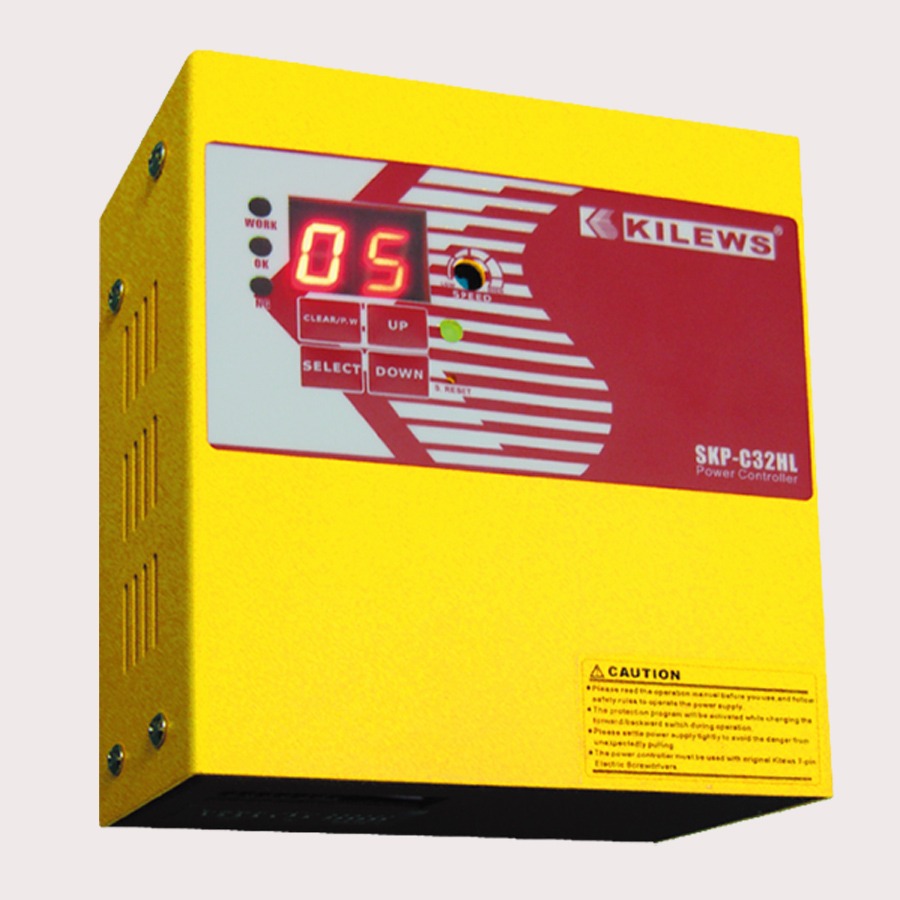
In modern manufacturing, even a small assembly error can lead to product rejection, rework, customer complaints, and unnecessary production costs. Screws may be small components, but their role in maintaining the strength, stability, and reliability of an assembled product is significant. This is where a screw counter becomes an important part of an efficient fastening process.
A screw counter is designed to monitor the number of screws fastened during an assembly operation and help operators identify missing or incomplete fastening. When integrated with an electric screwdriver, sensors, or a PLC-based production system, it can turn a simple screwdriving operation into a more controlled and traceable process.
For manufacturers handling repetitive assembly work, a screw counting system can provide better consistency while reducing the chances of human error. It is particularly useful in electronics, electrical equipment, automotive components, appliances, telecom equipment, and other industries where multiple screws need to be fastened accurately on every product.
What Is a Screw Counter?
A screw counter is a device used to monitor and control the number of screws fastened during an assembly process. Instead of relying entirely on an operator to remember whether every screw has been installed, the counter keeps track of the fastening sequence and indicates when the required number of screws has been completed.
In a typical setup, the screw counter works alongside an electric screwdriver. The system can be configured with a specific screw count, and the operator continues fastening until the programmed number is reached. Depending on the model and setup, the system can also provide OK, NG, or completion signals.
This makes the screw counter more than a simple counting device. It can become part of a mistake-proofing or poka-yoke system, helping manufacturers prevent products from moving forward with missing screws.
For example, if a product requires eight screws, the counter can be configured for eight fastening operations. If only seven screws are successfully fastened, the operator receives an indication that the assembly is incomplete. This simple control can make a significant difference in repetitive production environments.
Why Is Screw Counting Important in Manufacturing?
Manual screwdriving may appear straightforward, but repetitive assembly creates opportunities for mistakes. Operators can lose track of the number of screws installed, especially when working quickly or handling products with multiple fastening points.
A screw counter adds a layer of process control.
In manufacturing environments, the benefits go beyond simply knowing the number of screws used. Accurate screw counting can help improve product consistency, reduce rework, and support quality control procedures.
Prevents Missing Screws
One of the primary purposes of a screw counter is to help detect missing screws. If an assembly requires a fixed number of fastening operations, the counter can monitor whether the required count has been completed.
This is especially useful for products where every fastening point is important for structural strength or electrical safety.
Reduces Operator Error
Repetitive work can become monotonous, and even experienced operators can occasionally miss a fastening point. A screw counter reduces dependence on memory by providing a defined fastening sequence.
Instead of manually keeping track of each screw, the operator can follow the system’s count.
Supports Consistent Assembly
Consistency is essential when manufacturing the same product repeatedly. A controlled screwdriving process helps ensure that each unit goes through the same basic fastening procedure.
This can contribute to better assembly quality and more predictable production results.
Helps Reduce Rework
A missing screw discovered later in the production process can mean additional inspection and rework. Identifying an incomplete fastening cycle at the workstation itself can help prevent such issues from moving further down the production line.
How Does a Screw Counter Work?
A screw counter typically works by communicating with the electric screwdriver and, where required, external sensors or a PLC. The exact operation depends on the model and the production setup.
The operator first sets the required screw count. During assembly, each qualifying fastening operation is registered by the system. The display then indicates the remaining or completed count.
Once the programmed number is reached, the system can provide an OK or completion signal. If the process does not meet the configured conditions, an NG signal or alarm can be generated.
Modern screw counters can also include additional controls for fastening time, slow-start operation, sensor input, external reset, and output signals.
For example, Kilews screw counters available through Sumitron support count-up and count-down modes, adjustable fastening parameters, sensor integration, and OK/NG/OK ALL outputs. Certain models also support auto-learning and PLC integration.
This allows the screw counter to become part of a broader automated screwdriving solution rather than functioning as an isolated counting device.
Key Features to Look for in an Industrial Screw Counter
Choosing the right screw counter depends on the fastening application, screwdriver being used, production volume, and level of automation required.
Here are some features worth considering when selecting a screw counting system.
- Programmable Screw Count: The ability to set the required number of screws is fundamental. A good system should allow the operator or production engineer to configure the count according to the product being assembled. Some Kilews screw counter models support counting from 1 to 99 screws, making them suitable for a range of assembly applications.
- Count-Up and Count-Down Modes: Different production processes may require different counting methods. Count-up mode can show how many screws have already been fastened, while count-down mode can indicate how many remain. Having both options provides greater flexibility for different workstation requirements.
- Sensor Connectivity: Sensors can add another level of process control. External sensors can help verify the position or operation of a component before the next fastening action takes place. This can help reduce errors caused by incorrect positioning or skipped operations.
- OK and NG Signals: A screw counter with OK/NG output allows the fastening process to communicate with other equipment. An OK signal can indicate that the required fastening cycle has been completed, while an NG signal can indicate an error or incomplete operation. These outputs can be particularly useful when the counter is connected to a larger production control system.
- PLC Integration: For automated production lines, PLC connectivity can be an important requirement. It allows the screw counter to communicate with other equipment and become part of an integrated production process. Kilews screw counters offered by Sumitron include external input and output functions and support PLC integration for process control.
- Slow-Start Function: Some fastening applications require the screwdriver to begin at a lower speed before moving to normal operating speed. A slow-start function can be useful where controlled screw engagement is important. The Kilews SKP-BC40HL, for example, provides adjustable slow-start time and speed settings.
- Auto-Learning: Auto-learning can be useful when fastening conditions vary or when the operator needs to establish fastening time without manually determining every parameter. The Kilews screw counter range available from Sumitron includes models with auto-learning functionality for applications involving unknown screw lengths or screwdriver rotation speeds.
Screw Counter vs. Manual Screw Counting
The difference between manual counting and an automated screw counter becomes more important as production volumes increase.
With manual counting, the operator has to remember or visually verify every fastening operation. This may work for low-volume assembly, but the possibility of missed screws increases when the process is repetitive or time-sensitive.
A screw counter provides a defined process. The required number of screws is programmed in advance, and the system tracks the fastening cycle.
This does not mean that every manufacturing operation needs automation. However, when an assembly requires several screws per product and the same process is repeated hundreds or thousands of times, automated counting can provide a practical way to improve process control.
The combination of a screw feeder, electric screwdriver, and screw counter can take this further. The feeder manages screw supply, the screwdriver performs fastening, and the counter monitors the required fastening count. Sumitron’s automated screwing solutions cover these types of components and accessories.
Applications of Screw Counters Across Industries
Screw counters are useful wherever products require repetitive and controlled screw fastening.
- Electronics Manufacturing: Electronic assemblies often contain multiple fastening points in compact spaces. Missing a single screw can affect the stability of an enclosure, PCB assembly, or internal component. A screw counter can help operators maintain a consistent fastening sequence.
- Automotive Components: Automotive manufacturing requires repeatability and process control at every stage. Screw counters can be used for components, assemblies, and sub-assemblies where a defined number of fastening operations is required.
- Electrical Equipment: Electrical panels, appliances, control units, and other electrical products often involve repetitive screw fastening. A counting system can help ensure that required fastening operations are completed before the product moves to the next stage.
- Telecom Equipment: Telecommunication equipment frequently involves enclosure and component assembly where consistent fastening is important. A screw counter can support production teams by monitoring the number of fastening operations.
- Consumer Appliances: From small appliances to larger equipment, screwdriving is a common assembly operation. When the same product is manufactured repeatedly, screw counting can help standardize the workstation process.
How Screw Counters Support Poka-Yoke Manufacturing
Poka-yoke, or mistake-proofing, focuses on designing processes in a way that prevents errors or identifies them before they affect the finished product.
A screw counter can contribute to this approach by preventing an operator from simply moving on after an incomplete fastening cycle.
For example, a workstation can be configured so that the operator must complete the programmed screw count before the process is considered finished. With suitable external inputs and outputs, the counter can communicate with other production equipment.
Some Kilews models also include self-locking functions when the counter detects an error, along with OK, NG, and OK ALL signal outputs.
This type of process control is particularly valuable for manufacturers looking to reduce assembly mistakes without making the workstation unnecessarily complicated.
Choosing the Right Screw Counter for Your Application
The best screw counter is not necessarily the one with the largest number of features. It should be the one that matches the actual requirements of your production process.
Before selecting a system, consider:
- Number of Screws per Product: Determine how many fastening operations are required for each product. If the count varies between products, look for a system that can store multiple sets of data.
- Screwdriver Compatibility: Check whether the counter is designed for the screwdriver currently being used or the screwdriver you plan to install. Kilews offers different screw counter configurations for brush and brushless screwdriver systems.
- Required Level of Automation: A standalone counter may be sufficient for a manual workstation, while an automated production line may require sensor and PLC integration.
- Fastening Time: If screw length, rotation speed, or fastening conditions vary, features such as adjustable time limits and auto-learning may be useful.
- Production Volume: High-volume production generally benefits more from automated screw counting because even a small error rate can result in significant rework over thousands of units.
Why Choose Sumitron for Screw Counting and Automated Screwing Solutions?
Sumitron has been serving India’s industrial sectors since 1986 and offers equipment across electronics, electrical, automotive, pharmaceutical, and telecom applications. Its portfolio includes automated screwing solutions, electric screwdrivers, screw feeders, torque tools, and screw counters.
The company’s approach also extends beyond supplying equipment. Sumitron highlights application support through its team of application engineers, along with customer service, product diversity, ISO certification, and logistics support.
For manufacturers evaluating screw counting systems, this application-focused approach can be valuable because the right solution depends on more than the counter itself. The screwdriver, fastening parameters, screw type, production volume, sensors, and existing automation system all need to work together.
Sumitron’s Kilews range includes screw counters such as the SKP-BC40HL and screw counters designed for carbon brush screwdriver applications, providing options for different industrial fastening requirements.
FAQs
Q1. What is a screw counter used for?
Ans. A screw counter monitors the number of screws fastened and helps detect missing or incomplete fastening.
Q2. How does a screw counter work?
Ans. It tracks each fastening operation against a programmed screw count and can provide OK, NG, or completion signals.
Q3. How does a screw counter help reduce assembly errors?
Ans. It reduces dependence on manual counting and helps operators identify missed screws before the product moves further in production.
Q4. Can a screw counter be connected to a PLC?
Ans. Yes, compatible screw counters can integrate with PLC systems and provide external input and output functions for process control.
Q5. What features should you look for in an industrial screw counter?
Ans. Important features include programmable screw counts, count-up/count-down modes, sensor connectivity, OK/NG signals, PLC integration, and auto-learning.
Q6. Which industries can use screw counters?
Ans. Screw counters are useful in electronics, automotive, electrical equipment, telecom, and consumer appliance manufacturing.
Q7. Can a screw counter be used as a poka-yoke system?
Ans. Yes, it can help prevent incomplete fastening by requiring the programmed screw count before the assembly process is considered complete.
Q8. How do you choose the right screw counter for your application?
Ans. Consider the number of screws, screwdriver compatibility, automation level, fastening time, and production volume before selecting a system.
Conclusion
A screw counter may be a compact component within an assembly workstation, but it can play an important role in maintaining fastening accuracy and production consistency.
By monitoring screw counts, supporting OK/NG signals, working with sensors, and connecting with PLC-based systems, a screw counter can help manufacturers identify incomplete fastening before the product moves further into production.
For companies looking to improve their industrial screwdriving process, the combination of an electric screwdriver, screw feeder, and screw counter can provide a more controlled and efficient assembly workflow.
The right system ultimately depends on your product, screw type, fastening requirements, production volume, and desired level of automation. With the right configuration, screw counting can become a simple yet effective part of a reliable quality-control process.
Looking for a reliable screw counter for your assembly process?
Explore Sumitron’s Kilews Screw Counter solutions designed for accurate screw counting, error detection, sensor integration, and production-line control.
Explore Screw Counter Solutions →
Read Also This Blog


[…] Screw Counter for Accurate Fastening and Assembly Control […]