
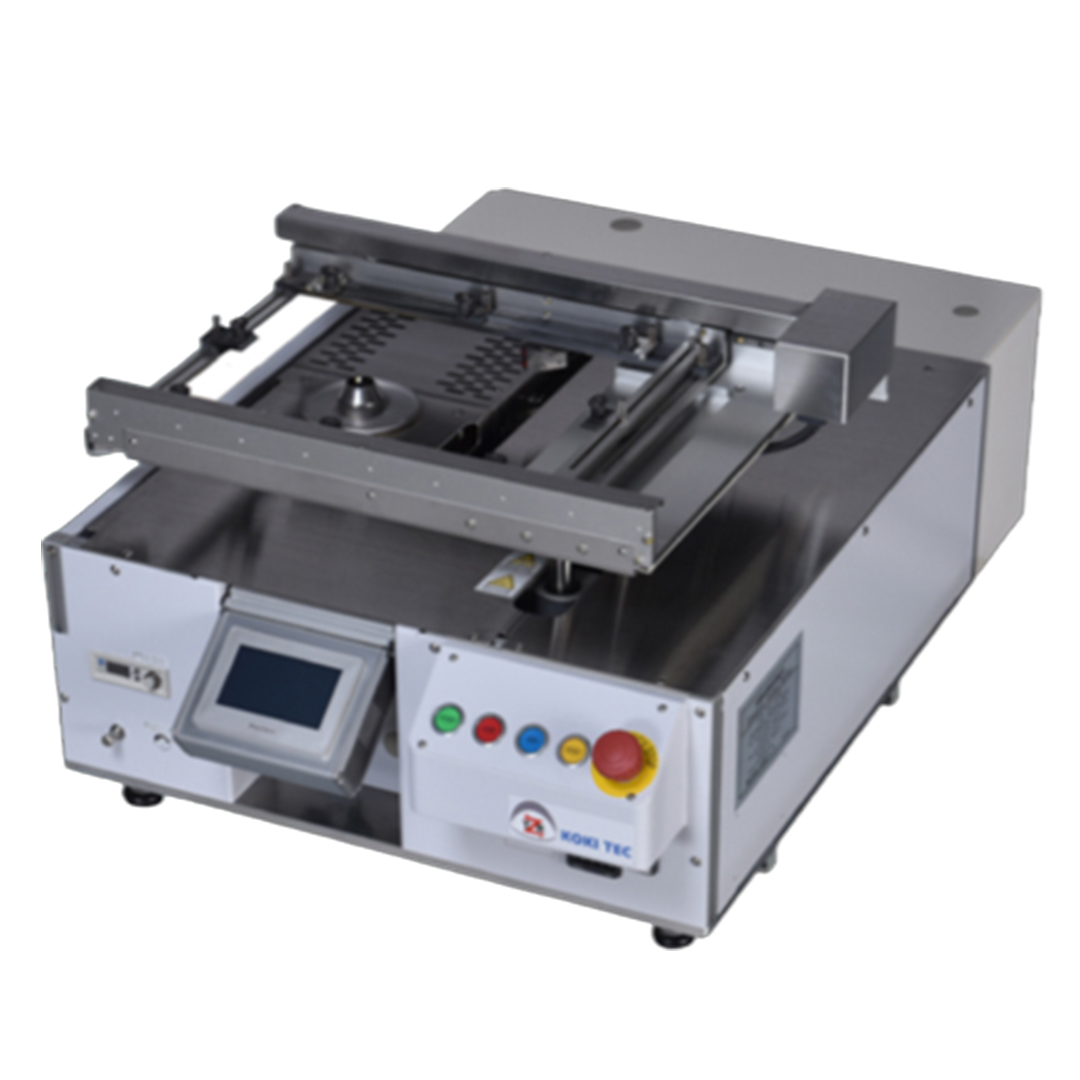
Modern printed circuit boards often combine surface-mount components with through-hole components on the same assembly. While reflow soldering works well for many SMT components, through-hole components still require a reliable soldering method. Using traditional wave soldering for every part of a mixed-technology PCB is not always practical, especially when certain components are sensitive to heat or when only specific areas of the board need soldering.
This is where a Selective Soldering Machine becomes useful. It applies solder only to the required points on a PCB instead of exposing the entire board to a solder wave. This controlled approach can improve process consistency, reduce unnecessary heat exposure and provide better control over soldering of through-hole components.
For electronics manufacturers handling mixed-technology PCB assemblies, selective soldering can provide a practical alternative to manual soldering and full-board wave soldering. The technology is particularly useful where repeatability, controlled solder volume and accurate positioning are important.
What Is a Selective Soldering Machine?
A Selective Soldering Machine is an automated PCB soldering system designed to solder specific through-hole joints or selected areas of a circuit board. Unlike wave soldering, where a large section of the PCB comes into contact with molten solder, selective soldering directs the solder to predetermined locations.
The machine generally combines several operations, including flux application, preheating and soldering. Depending on the machine configuration, these operations can be controlled through programmable software and dedicated process settings.
The main purpose is simple: solder the required joints while keeping surrounding components and PCB areas away from unnecessary heat and solder.
Sumitron’s selective soldering range includes systems designed for different production requirements, including compact benchtop machines and larger inline solutions. Its product category includes models such as FU-500/HF-600, Takurobo Ultima, EQSS-330SHD+MD, EQS-350SHDDD and SELBOII-350SHD.
Why Is Selective Soldering Used in PCB Assembly?
Selective soldering is useful for PCB assemblies where only specific through-hole components need soldering. Its controlled process offers several practical advantages for manufacturers working with mixed-technology boards and components that require careful thermal management.
Mixed-Technology PCB Assemblies
Many PCBs are not made entirely with SMT components. Connectors, switches, transformers, terminals and other components may still use through-hole leads because of their mechanical strength or electrical requirements. Selective soldering allows these components to be soldered after the SMT process without applying solder across the complete board.
Reduced Thermal Exposure
Some PCBs contain components that should not be subjected to unnecessary thermal stress. Since selective soldering targets specific solder joints, the process can limit heat exposure compared with methods that heat larger sections of the assembly.
Better Control Over Solder Application
A programmable machine can control where solder is applied, the movement path and other process parameters. This level of control helps manufacturers maintain more consistent solder joints across repeated production cycles.
How Does a Selective Soldering Machine Work?
The exact sequence can vary according to the machine and PCB design, but a typical selective soldering process consists of several controlled stages.
PCB Positioning
The PCB is placed in the machine using a suitable fixture or conveyor arrangement. Correct positioning is important because the soldering system needs to reach the programmed solder points accurately.
Flux Application
Flux is applied to the areas where soldering will take place. It helps remove oxides from the surfaces and supports proper solder wetting. Selective fluxing systems can apply flux only to the required locations rather than covering the complete board.
Preheating
The PCB may then be preheated before soldering. Preheating helps bring the board and the selected soldering area to a suitable temperature, which supports solder flow and can reduce thermal shock.
Some selective soldering systems use nitrogen during the process. Sumitron’s Takurobo Ultima range, for example, lists nitrogen supply as part of its system specifications, while its SELBOII system can be configured with N2 preheating to improve solder fluidity and reduce oxidation.
Selective Soldering
Once the required conditions are reached, a solder nozzle moves to the programmed points. Molten solder is supplied to the through-hole joints according to the programmed path and process settings.
Different nozzle sizes can be used depending on the component arrangement and soldering requirement. The Takurobo Ultima TRZ, for instance, supports multiple nozzle sizes, with options available for finer applications.
Inspection and Cooling
After soldering, the board can be inspected for joint quality, solder coverage and possible defects. Once the solder solidifies and the assembly reaches the required condition, the PCB can move to the next stage of production.
Key Benefits of a Selective Soldering Machine
A Selective Soldering Machine offers several benefits for PCB manufacturers, particularly when working with mixed-technology assemblies. Its controlled soldering process can improve accuracy, consistency and process efficiency while reducing unnecessary heat exposure and solder usage during through-hole component assembly.
Accurate Soldering of Specific Points
The biggest advantage of selective soldering is its ability to focus on individual solder joints. Instead of exposing the entire PCB to molten solder, the machine follows a programmed path and applies solder only where it is required. This makes it suitable for assemblies with closely positioned SMT and through-hole components.
Consistent Results
Manual soldering can vary depending on operator technique, soldering speed and temperature control. An automated system follows programmed parameters repeatedly, helping manufacturers achieve more consistent solder joints during production.
Lower Risk of Unnecessary Heat Exposure
Selective soldering limits solder contact to defined areas. This can be useful when a PCB contains heat-sensitive components near the through-hole joints that need to be soldered. Controlled preheating and soldering parameters further support stable processing.
Reduced Solder Waste
Because solder is applied only to selected areas, the process can reduce unnecessary solder consumption compared with methods where a complete solder wave is used. Sumitron’s Takurobo Ultima documentation specifically notes solder savings through reduced dross generation.
Suitable for Different Production Volumes
Selective soldering equipment is available in different configurations. Compact benchtop systems can be useful for smaller production runs and varied PCB models, while inline systems can be integrated into larger manufacturing lines.
Sumitron’s product information describes the SELBOII as an inline module connection type selective soldering machine, with configurations involving spray, preheat and DIP modules depending on customer requirements.
Selective Soldering vs Wave Soldering
Both selective soldering and wave soldering are used for through-hole PCB assembly, but their operating methods are different.
Wave soldering exposes the underside of the PCB to a continuous wave of molten solder. It is well suited to high-volume production where many through-hole joints can be processed simultaneously.
Selective soldering, on the other hand, applies solder to predetermined areas. It is particularly useful when a PCB has a mixture of SMT and through-hole components or when certain areas should not come into contact with solder.
The choice between the two depends on PCB design, production volume, component placement, required flexibility and process requirements. A selective soldering machine may be more suitable when precision and targeted soldering are more important than processing the entire board at once.
Applications of Selective Soldering Machines
Selective soldering machines can be used across industries where PCBs combine through-hole and surface-mount components. Their targeted soldering process is suitable for applications that require reliable joints, controlled heat exposure and repeatable results across different types of electronic assemblies.
Automotive Electronics
Automotive electronic assemblies often include connectors, control modules, sensors and other components that require reliable solder joints. Selective soldering can be used where through-hole connections need to be processed alongside SMT components.
Industrial Electronics
Industrial control boards, automation equipment and power-related electronic assemblies may contain a combination of component types. Selective soldering provides controlled soldering for specific through-hole connections without applying solder across the whole PCB.
Consumer Electronics
Products such as appliances, power supplies and electronic control systems can use mixed-technology PCBs. Selective soldering is useful for connectors and other through-hole components that are integrated into these assemblies.
Telecom and Communication Equipment
Communication equipment requires reliable PCB connections and consistent production quality. Selective soldering can help process specific through-hole components while maintaining control over the rest of the assembly.
Power Electronics
Power boards frequently use larger connectors, terminals and other through-hole components. Depending on the board design, selective soldering can provide controlled solder application for these joints.
Important Features to Consider Before Buying
Choosing a Selective Soldering Machine should be based on the actual PCB and production requirements rather than machine specifications alone.
PCB Size and Thickness
Check the minimum and maximum PCB dimensions supported by the machine. Board thickness and component height should also be considered to ensure the machine can accommodate the assemblies being produced.
For example, the Takurobo Ultima TRZ lists a standard PCB size range of 50 × 50 mm to 250 × 330 mm, with larger board options available. It also supports PCB thicknesses from 0.8 to 2.0 mm under its standard specification.
Nozzle Selection
Different through-hole components may require different solder nozzle sizes. A machine with multiple nozzle options can provide greater flexibility for different PCB designs.
Programming and Data Management
Software support is another important consideration. Easy programming, stored soldering conditions and process data can simplify changeovers when manufacturers handle multiple PCB models.
The Takurobo Ultima TRZ uses Takumoni control software and supports programmed soldering steps and multiple files, allowing manufacturers to manage different soldering requirements.
Flux and Solder Control
Accurate flux application and stable solder flow are important for reliable joints. Features such as flux flow monitoring and automatic solder feeding can help improve process control, depending on the machine configuration.
Nitrogen Support
Nitrogen can help reduce solder oxidation and support solder flow during the process. If the application requires nitrogen, the machine’s nitrogen supply requirements and operating configuration should be checked before purchase.
Selective Soldering for Small-Batch and High-Mix Production
One of the useful characteristics of selective soldering is its flexibility when manufacturers produce different PCB models. High-mix production often involves frequent changes in board design, component placement and soldering requirements.
A programmable selective soldering system allows different soldering paths and process conditions to be stored and recalled as required. This can reduce dependence on manual soldering and make production changes easier to manage.
Sumitron’s product material describes the SELBOII as suitable for small-lot production with many product varieties, while the Takurobo Ultima systems are designed around programmable operation and automatic route calculation.
Common Challenges in Selective Soldering
Selective soldering provides greater control, but the process still needs to be set up correctly. Flux application, preheat temperature, solder temperature, nozzle selection, solder flow and travel speed can all affect the final joint.
Flux residue is another point that requires attention. When heat is applied only to selected areas, flux may not activate uniformly across the board. Appropriate preheating and process settings can help reduce flux migration and support better activation.
PCB design should also be considered before production. Component spacing, through-hole diameter, board thickness and access around solder joints can influence nozzle selection and soldering performance.
Why Choose an Automated Selective Soldering Process?
Manual soldering can work for prototypes, repair work and low-volume applications, but it becomes difficult to maintain the same level of consistency as production volume increases. An automated selective soldering process provides controlled movement, repeatable solder application and programmable process conditions.
For manufacturers producing mixed-technology PCBs, this can make the production process more predictable while reducing the amount of manual work required for through-hole soldering.
Sumitron has been serving India’s industrial sectors since 1986 and provides equipment across electronics, electrical, automobile, pharmaceutical and telecom applications. Its current product portfolio includes automatic soldering equipment, selective soldering systems, soldering stations, SMT process equipment and inspection systems.
Final Takeaway
A Selective Soldering Machine is a practical solution for PCB assemblies where only specific through-hole components need to be soldered. By combining controlled fluxing, preheating and targeted solder application, it can provide consistent results while limiting unnecessary heat and solder exposure.
For manufacturers working with mixed-technology PCBs, high-mix production or assemblies containing sensitive components, selective soldering can offer greater process control than manual soldering or full-board wave soldering.
The right machine depends on PCB dimensions, component layout, production volume, nozzle requirements, soldering points, flux system, programming needs and available production space. A proper evaluation of these factors helps manufacturers select equipment that fits both current production requirements and future PCB assembly needs.
Sumitron offers a range of selective soldering solutions, including compact benchtop systems and inline configurations, for different PCB assembly requirements.
Read Also This Blog


[…] Selective Soldering Machine: Working, Benefits & Applications […]