
Soldering is an important process in electronics manufacturing, PCB assembly, electrical repairs, and industrial equipment production. It creates electrical and mechanical connections between metal components by melting a filler metal, known as solder, which joins the surfaces as it cools and solidifies.
However, not every soldering application requires the same material. The solder used to repair a small circuit board may differ considerably from the material used in automated electronics production. Factors such as alloy composition, melting temperature, component sensitivity, production volume, and regulatory requirements influence the selection.
Understanding the different types of solder helps technicians, engineers, and manufacturers choose suitable materials for their applications. The right choice can improve joint quality, support consistent production, and reduce defects during assembly and repair.
For businesses working with printed circuit boards (PCBs), surface-mount technology (SMT), and automated soldering systems, selecting the right solder is closely connected to the equipment and manufacturing process being used.
What Is Solder and Why Is It Important?
Solder is a metallic filler material used to join two metal surfaces without melting the base materials themselves. During soldering, the material melts, spreads across suitable surfaces, and forms a connection when it cools. In electronics, this connection can provide both electrical conductivity and mechanical support.
The composition of solder determines important characteristics such as its melting temperature, strength, wetting behaviour, and suitability for particular manufacturing processes. Flux, which is often incorporated into solder wire or supplied separately, helps remove surface oxides and allows molten solder to wet the metal effectively.
Solder is widely used in:
- PCB assembly: Connecting electronic components to circuit board pads.
- Electrical connections: Joining wires, terminals, and suitable metal contacts.
- Electronic repairs: Replacing damaged components and repairing faulty connections.
- Automotive electronics: Assembling control units, sensors, and electronic modules.
- Industrial manufacturing: Supporting the assembly of electronic equipment and control systems.
The material must be compatible with the components, operating conditions, and applicable manufacturing requirements. Using an unsuitable alloy or flux can lead to poor wetting, weak joints, corrosion, or reliability problems.
What Are the Main Types of Solders?
The types of solder can be classified according to their metallic composition, physical form, and intended application. Understanding these categories makes it easier to identify the right material for a particular task.
Two important distinctions are worth remembering. First, solder alloys are classified by the metals they contain, such as tin, lead, silver, copper, or bismuth. Second, solder is supplied in different forms, including wire, paste, and solid bars, depending on how it will be applied.
1. Leaded Solder
Leaded solder traditionally contains tin and lead. Two common examples are Sn63/Pb37, containing 63% tin and 37% lead, and Sn60/Pb40, containing 60% tin and 40% lead.
Sn63/Pb37 is a eutectic alloy that melts at approximately 183°C. Sn60/Pb40 melts over a small temperature range rather than at a single temperature. These alloys have traditionally been popular in electronics repair because they generally offer good wetting and are relatively easy to work with.
Common applications include:
- Electronic prototyping and repair where permitted.
- Maintenance of legacy equipment.
- Specialised applications where the alloy is approved.
- Certain regulated or exempt manufacturing applications.
The main consideration is lead content. Lead can pose health and environmental risks, so handling procedures, workplace hygiene, and applicable regulations must be followed. Lead-free alternatives are required for many commercial electronics applications, depending on the product and applicable regulations.
2. Lead-Free Solder
Lead-free solder is formulated without intentionally added lead and is widely used in modern electronics manufacturing. Common alloys include tin-silver-copper (SAC), tin-copper (Sn-Cu), and tin-bismuth (Sn-Bi).
One widely used alloy is SAC305, which contains 96.5% tin, 3% silver, and 0.5% copper. Its melting range is approximately 217–220°C, higher than that of conventional tin-lead eutectic solder.
Where is lead-free solder used?
- Consumer electronics manufacturing.
- PCB assembly and SMT production.
- Electronic products designed to meet applicable substance restrictions.
- Automated soldering and reflow processes.
Lead-free solder supports compliance with requirements such as the European Union’s Restriction of Hazardous Substances (RoHS) Directive, where applicable. However, not all lead-free alloys behave identically. Their melting temperatures, wetting characteristics, and mechanical properties vary, so the alloy must be selected according to the application and process.
3. Silver-Bearing Solder
Silver-bearing solder contains silver as part of its alloy composition. In electronics, silver may be combined with tin and copper or used in other formulations to achieve specific material properties.
SAC305 is one example of a silver-bearing lead-free solder used in electronics assembly. Other silver-containing alloys may be selected for specialised applications depending on their melting range and joint requirements.
These solders are used in PCB manufacturing, component assembly, and other applications where the chosen alloy’s performance characteristics are suitable. Silver content alone does not guarantee that a solder will provide better results; the complete alloy composition and process conditions matter.
When selecting silver-bearing solder, manufacturers should consider the operating temperature, component specifications, cost, and reliability requirements.
4. Tin-Copper Solder
Tin-copper solder is a lead-free alloy made primarily from tin and copper. Sn99.3/Cu0.7 is a common composition, containing approximately 99.3% tin and 0.7% copper.
This alloy generally melts at around 227°C, which is higher than the melting temperature of conventional tin-lead solder. Its composition makes it an option for selected electronics manufacturing processes.
Tin-copper solder may be used in wave soldering and other applications where its properties are appropriate. The suitability of a particular formulation depends on the equipment, component finishes, required joint quality, and production conditions.
Manufacturers should evaluate wetting behaviour and process settings before adopting an alloy for a production line.
5. Low-Temperature Solder
Low-temperature solder is designed to melt at a lower temperature than conventional solder alloys. Some formulations use bismuth, indium, or other metals to achieve this property.
For example, certain tin-bismuth alloys melt at approximately 138–140°C. The exact melting range depends on the composition.
These alloys can be useful when working with temperature-sensitive components or assemblies that cannot tolerate the higher temperatures associated with conventional lead-free soldering.
However, low-temperature solder is not suitable for every application. Its mechanical properties, compatibility with existing solder joints, and resistance to the product’s operating temperatures must be checked before use. Mixing incompatible alloys can also produce joints with undesirable melting or reliability characteristics.
Types of Solder Based on Physical Form
Besides alloy composition, the physical form of solder affects how it is delivered to the joint. Manufacturers select a form based on the assembly method, equipment, component design, and production volume.
Solder wire, solder paste, and solder bar are among the most widely used forms in electronics manufacturing. Although they may contain similar metallic alloys, their application methods differ considerably.
1. Solder Wire
Solder wire is a thin, solid strand of solder supplied on a spool or in a coil. It is commonly used with a soldering iron for manual assembly, maintenance, and electronic repair.
Many electronics solder wires contain a flux core that releases flux during heating. This helps prepare the metal surfaces for soldering and supports better wetting.
Solder wire is suitable for:
- Through-hole component assembly.
- Repairing PCB connections.
- Joining suitable wires and terminals.
- Reworking individual electronic components.
- Manual soldering and certain robotic soldering applications.
Wire diameter is an important selection factor. A thinner wire allows better control when working on small components, while a thicker wire can deliver more material to larger joints.
2. Solder Paste
Solder paste is a mixture of fine solder alloy particles and flux. It is commonly used in surface-mount technology, where components are placed onto printed circuit boards.
During assembly, paste is deposited onto PCB pads through stencil printing or a suitable dispensing method. Components are then positioned, and the assembly passes through a controlled heating process, usually in a reflow oven. The solder particles melt and form joints as the assembly cools.
Solder paste is particularly useful for:
- SMT production lines.
- Fine-pitch electronic components.
- High-volume PCB assembly.
- Automated component placement and reflow soldering.
Its performance depends on the alloy, powder size, flux formulation, storage conditions, printing quality, and reflow profile. Manufacturers must also follow the supplier’s storage and handling instructions to maintain consistent results.
3. Solder Bar
A solder bar is supplied as a solid metal bar or ingot. Instead of being fed directly into an individual joint, it is melted in a solder pot or machine reservoir.
It is commonly used in wave soldering, dip soldering, solder baths, and suitable industrial soldering systems. Additional flux may be applied separately, depending on the process.
A solder bar is useful when production requires repeated soldering operations and a controlled supply of molten solder. It is particularly relevant to industrial environments where consistent processing and material management are important.
The alloy composition, bath temperature, contamination levels, and oxidation must be monitored to maintain process quality.
Understanding Flux Types in Soldering
Flux is an important part of the soldering process because metal surfaces can develop oxide layers that interfere with solder wetting. Flux helps remove or manage these oxides and supports the formation of a sound joint.
Flux chemistry affects residue, cleaning requirements, compatibility, and process performance. The correct selection depends on the alloy, substrate, assembly method, and cleanliness requirements.
Common flux categories include:
- Rosin-based flux: Traditionally used in electronics soldering, with performance depending on the formulation and activity level.
- Water-soluble flux: Often provides stronger cleaning action but generally requires thorough post-solder cleaning according to the manufacturer’s instructions.
- No-clean flux: Designed to leave residues that may not require removal when the specified process conditions are met.
- Separate liquid or paste flux: Applied independently when the process requires additional flux beyond what is supplied in the solder.
Not all fluxes are suitable for every application. Acid-based fluxes intended for plumbing or metalwork should not be substituted for electronics-grade flux unless the product is explicitly approved for the application. Residues from unsuitable flux can damage electronic assemblies.
How to Choose the Right Type of Solder
Selecting solder involves more than comparing alloy names. The material must work with the components, equipment, and production process while meeting the required quality and compliance standards.
1. Check the Alloy Composition
Determine whether the application requires lead-free solder or permits a leaded alloy. Review the product specifications, applicable regulations, and requirements of the end customer before making a selection.
2. Consider the Melting Temperature
Different alloys melt at different temperatures. The soldering equipment, PCB materials, components, and existing joints must tolerate the required thermal profile.
For automated processes, temperature control and repeatability are particularly important. The recommended process settings should come from the solder and equipment manufacturers.
3. Match the Solder Form to the Process
Use solder wire for suitable manual soldering and repair tasks, solder paste for SMT reflow assembly, and solder bar for compatible wave, dip, or solder-pot processes.
Choosing the appropriate form helps the material work with the intended production method rather than forcing unnecessary process changes.
4. Review Flux and Cleaning Requirements
Check the flux classification, residue characteristics, and whether post-solder cleaning is required. Water-soluble and no-clean products have different handling and cleaning considerations.
A suitable flux helps improve wetting while reducing the risk of residue-related problems when used correctly.
5. Consider Production Volume and Equipment
Manual repair, prototype development, and high-volume manufacturing have different requirements. A technician repairing one connection may need solder wire, whereas an SMT production line may rely on stencil printing, automated component placement, and reflow soldering.
Equipment compatibility, material availability, process documentation, and ongoing maintenance should all form part of the decision.
The Role of Soldering Equipment in Joint Quality
Even the correct solder can produce poor results when the equipment or process is unsuitable. Temperature control, tip condition, heating consistency, and operator technique all influence the finished joint.
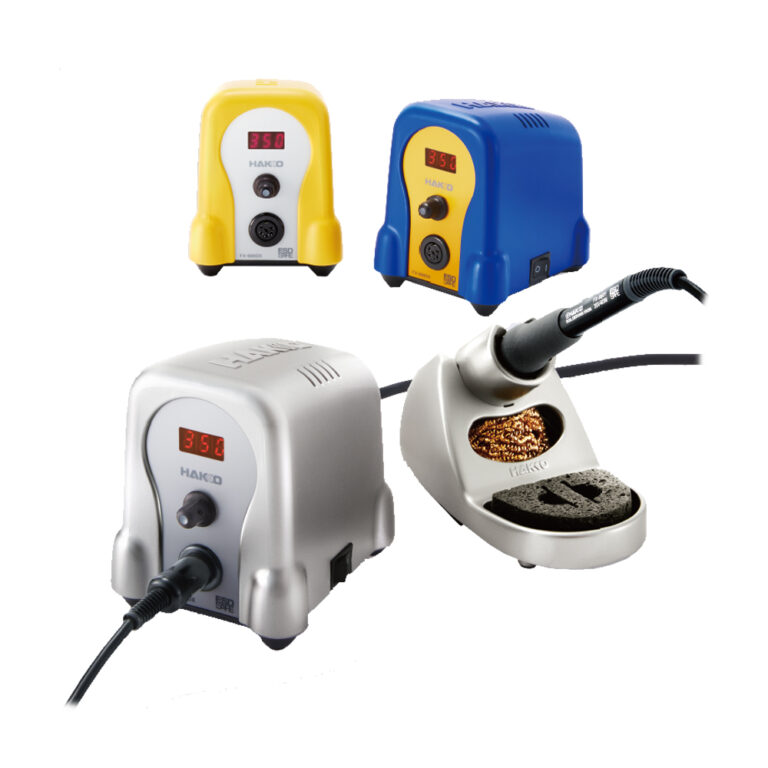
For manual soldering, a suitable soldering iron or temperature-controlled station helps maintain consistent heat transfer. For complex PCB repairs, a rework station can provide the controlled heating required to remove and replace components.
In larger production environments, selective soldering systems and soldering robots help automate specific joining operations. SMT equipment, including reflow profiling tools and solder paste handling equipment, supports process control and repeatability.
Sumitron offers a range of soldering and desoldering systems, automatic soldering solutions, SMT process equipment, and related accessories for industrial and electronics applications. Its catalogue includes products associated with brands such as Hakko and Tsutsumi.
Businesses selecting equipment should consider the type of solder, the assembly method, production requirements, and availability of technical support. Choosing compatible materials and equipment together helps establish a more consistent soldering process.
Common Soldering Problems and How to Prevent Them
Several soldering defects can occur when materials, equipment, or process settings are not properly matched. Identifying the likely cause helps technicians correct the process rather than repeatedly reworking the same joint.
Common issues include:
- Poor wetting: Oxidised surfaces, insufficient flux activity, or unsuitable heating conditions may prevent solder from spreading correctly.
- Cold joints: Inadequate heating or movement during solidification can produce weak or unreliable connections.
- Solder bridging: Excess material or incorrect deposition can create unwanted connections between adjacent pads.
- Excessive residue: An unsuitable flux or incorrect cleaning procedure can leave unwanted deposits.
- Component damage: Excessive temperature or prolonged heating can harm sensitive components and PCB materials.
Prevention begins with the correct solder specification, clean and compatible surfaces, properly maintained equipment, and suitable process parameters. Automated manufacturing may also require inspection, temperature profiling, and process monitoring to maintain quality across production batches.
Frequently Asked Questions (FAQs)
Q1. What are the main types of solder?
The main alloy categories include leaded, lead-free, silver-bearing, tin-copper, and low-temperature solder. Solder is also supplied in forms such as wire, paste, and bar, each suited to different applications.
Q2. What is the difference between leaded and lead-free solder?
Leaded solder contains lead, usually combined with tin, while lead-free solder uses alternative alloy compositions. Leaded alloys often melt at lower temperatures, whereas common lead-free alloys such as SAC305 require higher temperatures.
Q3. Which type of solder is commonly used in electronics?
Lead-free solder, particularly tin-silver-copper alloys such as SAC305, is widely used in modern electronics manufacturing. The appropriate choice depends on the product specification, assembly process, and applicable regulations.
Q4. What is solder wire used for?
Solder wire is commonly used for manual soldering, PCB repairs, through-hole component assembly, and joining suitable wires and terminals. Many electronics solder wires include a flux core to assist the soldering process.
Q5. What is solder paste used for?
Solder paste is primarily used in surface-mount technology. It is deposited onto PCB pads before components are placed and heated in a reflow process to form solder joints.
Q6. What is the difference between solder wire and solder paste?
Solder wire is a solid strand fed directly into a heated joint, while solder paste contains fine metal particles mixed with flux. Wire is common in manual soldering, whereas paste is widely used in automated SMT assembly.
Q7. What is the melting temperature of solder?
The melting temperature depends on the alloy. Sn63/Pb37 melts at approximately 183°C, SAC305 melts at approximately 217–220°C, and certain tin-bismuth alloys melt at approximately 138–140°C.
Q8. Why is flux used in soldering?
Flux helps remove or manage oxide layers on metal surfaces, allowing molten solder to wet the surfaces more effectively. Its formulation also affects residue behaviour and post-solder cleaning requirements.
Q9. How do I choose the right solder for PCB assembly?
Consider the alloy composition, required melting temperature, PCB and component specifications, solder form, flux chemistry, and manufacturing process. For SMT assembly, solder paste must also be compatible with the stencil, component pitch, and reflow profile.
Q10. What soldering equipment is used in electronics manufacturing?
Common equipment includes soldering irons, temperature-controlled soldering stations, desoldering systems, rework stations, selective soldering machines, soldering robots, and SMT process equipment. The right equipment depends on whether the application involves manual repair, component rework, or automated production.
Conclusion
Understanding the different types of solder helps electronics manufacturers, engineers, and repair technicians make informed decisions about materials and processes. Leaded and lead-free alloys serve different requirements, while solder wire, paste, and bar are designed for different methods of application.
Flux selection, melting temperature, equipment compatibility, and regulatory requirements also influence the suitability of a soldering material. A choice that works for manual PCB repair may not be appropriate for an automated SMT production line.
For industrial applications, soldering materials should be selected alongside the equipment and process used to apply them. Sumitron provides soldering and desoldering systems, automatic soldering solutions, and SMT process equipment to support different electronics manufacturing and maintenance needs.
To review suitable solutions for your application, visit Sumitron’s website or browse its product categories.
Read Also This Blog