
Repairing an electronic circuit board often requires more than simply replacing a faulty component. Before a new component can be installed, the existing solder needs to be removed carefully without damaging the PCB, component pads or surrounding parts. This is where a Desoldering Station for Electronics becomes an important tool.
A desoldering station combines controlled heating with solder extraction to remove molten solder from PCB joints. Unlike basic manual methods, a dedicated desoldering station provides controlled temperature and vacuum suction, making the removal process more consistent and easier to manage.
Desoldering equipment is commonly used in electronics repair, PCB rework, production support, servicing centres and maintenance workshops. Sumitron offers a range of desoldering solutions from HAKKO, including dedicated desoldering guns and stations designed for different repair and production requirements.
What Is a Desoldering Station?
A Desoldering Station for Electronics is a specialised repair tool used to heat and remove solder from a PCB. It generally consists of a heated desoldering handpiece, solder collection system and vacuum mechanism that pulls molten solder away from the joint.
When the heated nozzle is positioned over a soldered connection, the solder melts. Vacuum suction then draws the molten solder through the nozzle and into a collection or filter system. This leaves the component lead or connection point free for removal.
Unlike a conventional soldering iron, which is primarily designed to add or reflow solder, a desoldering station is specifically designed to remove existing solder from electronic assemblies.
How Does a Desoldering Station Work?
The operation of a desoldering station involves controlled heating followed by vacuum extraction. Both functions need to work together properly to remove solder efficiently while limiting unnecessary heat exposure to the PCB.
Heating the Solder Joint
The desoldering nozzle is positioned over the solder joint and heated until the solder reaches its melting point. Maintaining the correct temperature is important because insufficient heat can leave solder behind, while excessive heat can increase the risk of PCB or component damage.
Applying Vacuum Suction
Once the solder becomes molten, the operator activates the vacuum. The suction pulls the liquid solder through the hollow nozzle and into the filter or collection system.
Modern desoldering stations use dedicated vacuum pumps to provide controlled suction. For example, the HAKKO FR-400 listed by Sumitron uses a double-cylinder vacuum pump with a maximum vacuum pressure of 80 kPa and suction flow of 15 L/min.
Removing the Component
After most of the solder has been removed, the component can be taken out from the PCB. If solder remains around the lead, the process can be repeated rather than applying excessive force to remove the component.
This approach is particularly useful for through-hole components, connectors and other parts where solder fills the plated hole.
Why Use a Desoldering Station for Electronics?
A dedicated desoldering station can make component removal more controlled compared with using separate manual tools. This is especially useful when technicians regularly repair PCBs or handle multiple solder joints.
Controlled Solder Removal
Removing solder manually with an iron and solder wick can be suitable for simple jobs, but larger or more demanding repairs require better control. A desoldering station combines heating and suction in one tool, allowing the operator to melt and remove solder during the same operation.
Reduced Risk of PCB Damage
Excessive force is one of the common causes of damaged PCB pads during component removal. When solder is properly melted and extracted, the component can usually be removed with less mechanical stress on the board.
Faster Component Replacement
For repair technicians handling multiple boards, a dedicated desoldering tool can reduce the time needed to clear solder joints. This becomes especially useful when several through-hole connections need to be processed on the same PCB.
Better Results on High Heat-Capacity Boards
Some PCBs absorb and distribute heat quickly, making solder removal difficult with low-power tools. The HAKKO FR-400, for example, is designed with 300 W heating power for applications involving high heat capacity and high heat dissipation PWBs.
Key Features of a Good Desoldering Station
The performance of a desoldering system depends on several technical specifications. Temperature control, vacuum performance, nozzle compatibility and maintenance features should all be considered when selecting equipment.
A suitable system should provide enough heating and suction for the intended PCB applications while remaining practical for regular workshop or production use.
Temperature Control
Stable temperature is essential for melting solder efficiently without unnecessarily heating the PCB. A suitable temperature range should match the solder type, board construction and component requirements.
The HAKKO FR-410 listed by Sumitron operates within a 330°C to 450°C temperature range and provides temperature stability of ±5°C at idle temperature.
Vacuum Pressure and Suction Flow
Vacuum performance determines how effectively molten solder can be extracted from a joint. Strong and stable suction is particularly important when dealing with multilayer boards or joints containing a larger volume of solder.
A station with a double-cylinder vacuum pump can provide consistent suction during repeated operations.
Anti-Clogging System
Solders can sometimes solidify inside the nozzle or suction path, affecting performance. Anti-clogging features help move extracted solder through the system and reduce interruptions during repair work.
The HAKKO FR-400 uses an Anti Clogging Function that keeps the pump running after the trigger is released to help move the extracted solder towards the filter pipe.
Nozzle Selection
Different component leads and solder joints may require different nozzle sizes. A wider nozzle can be useful for larger connections, while smaller nozzles are more appropriate for fine joints.
The FR-400 range includes nozzle options for larger components, including applications involving leads or flat terminations of 2 mm or more.
Filter and Maintenance System
The extracted solder passes through a filter system before reaching the vacuum pump. A well-designed filter makes maintenance easier and helps protect the pump from solder particles and other contaminants.
The FR-410 includes a larger filter and transparent filter cover, allowing the operator to check the filter condition without complicated inspection.
Desoldering Station vs Desoldering Pump
Both desoldering stations and manual desoldering pumps are used to remove solder, but they differ in their operation and level of control.
A manual desoldering pump, sometimes called a solder sucker, is a simple hand-operated tool. It is inexpensive and useful for occasional repairs, but it requires a separate soldering iron to melt the solder.
A Desoldering Station for Electronics, on the other hand, combines heating and vacuum extraction in a dedicated system. This provides temperature control, powered suction and more consistent operation.
For occasional hobby work, a manual pump may be sufficient. For electronics repair centres, production maintenance and professional PCB rework, a powered desoldering station can provide greater repeatability and operator convenience.
Desoldering Station vs Soldering Station
Although both tools are used for PCB work, their primary functions are different. Understanding this difference can help technicians select the appropriate equipment for a particular repair or assembly task.
A soldering station is primarily designed to melt and apply solder to create or repair an electrical connection. A desoldering station is designed to melt existing solder and remove it from the PCB.
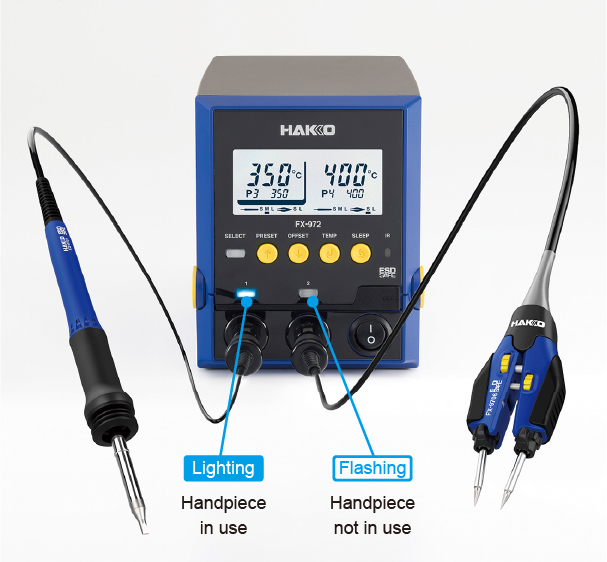
Some advanced rework systems combine both functions. Sumitron’s HAKKO FX-973 SMD & Desoldering Rework Station, for example, includes a dedicated desoldering tool along with soldering and other rework handpieces. It uses a three-port configuration and supports multiple handpiece combinations.
This type of system can be useful for workshops where soldering, desoldering and component rework are regularly performed at the same workstation.
Applications of Desoldering Equipment
Desoldering equipment is used across several electronics-related applications. The equipment can support routine repairs, component replacement, PCB rework and maintenance operations.
The required type of desoldering system may vary depending on the board design, component type, production volume and nature of the repair.
PCB Repair and Maintenance
Electronic service centres frequently need to remove damaged components before installing replacements. A desoldering station makes this process easier by removing solder from component leads and PCB holes.
Through-Hole Component Replacement
Through-hole components can be difficult to remove when solder fills the entire plated hole. Controlled heating combined with vacuum extraction helps clear the solder so the component can be removed.
Electronics Manufacturing
Production facilities may need to rework boards that do not pass inspection or contain incorrectly placed components. Desoldering equipment allows technicians to remove components before correcting the assembly.
Automotive Electronics
Automotive electronic assemblies can contain PCBs with connectors, control components and other through-hole parts. During maintenance and rework, reliable solder removal can help technicians replace faulty components.
Industrial Equipment Repair
Industrial controllers, power electronics and automation boards can be expensive to replace completely. Desoldering equipment allows technicians to work on individual components and repair the existing PCB.
Prototyping and Development
During product development, engineers may repeatedly change components on prototype boards. A dedicated desoldering tool can make these modifications faster and reduce unnecessary PCB damage.
Desoldering Multilayer PCBs
Multilayer PCBs can present additional challenges because their internal copper layers can absorb and distribute heat. As a result, solder joints may take longer to reach the required melting temperature.
A desoldering station with sufficient heating power and stable temperature control can help address this challenge. The HAKKO FR-410, for example, uses a 140 W desoldering tool, while the FR-400 provides a 300 W desoldering tool intended for demanding, high-heat-capacity applications.
The correct nozzle, heating time and suction timing should still be selected according to the PCB and component rather than relying only on higher power.
Common Problems During Desoldering
Even with professional equipment, certain problems can occur during solder removal. Understanding these issues can help technicians identify the cause and adjust the process accordingly.
Proper temperature settings, nozzle selection, vacuum performance and regular maintenance can help minimise common desoldering problems.
- Solder Does Not Melt Completely: If the solder does not become fully molten, the vacuum may not be able to remove it properly. This can happen when the temperature is too low or when heat is being transferred away rapidly by the PCB.
- Nozzle Gets Blocked: Molten solder can solidify inside the nozzle or extraction path. Regular cleaning, appropriate nozzle selection and an effective anti-clogging system can help reduce this issue.
- PCB Pad Lifting: Applying excessive force while removing a component can lift the copper pad from the PCB. The solder should be completely loosened before the component is pulled from the board.
- Incomplete Solder Removal: Some joints may retain a small amount of solder after the first suction cycle. Instead of forcing the component out, the joint should be reheated and the remaining solder removed.
How to Choose the Right Desoldering Station
Choosing a Desoldering Station for Electronics requires an understanding of the PCB work being performed. A system suitable for occasional repairs may not be appropriate for continuous production or high-heat-capacity boards.
Before purchasing equipment, consider heating power, temperature stability, vacuum pressure, suction flow, nozzle availability and maintenance requirements.
For light repair work, a compact desoldering gun may be sufficient. For regular professional use, look for a station with stable temperature control, adequate heating power, reliable vacuum performance and easy filter maintenance.
For heavy-duty applications, heating power becomes particularly important. Boards with large copper areas or high thermal mass may require more powerful equipment than standard electronic assemblies.
Nozzle availability should also be checked. If the workshop handles different component sizes, having access to multiple nozzle diameters can make the equipment more versatile.
For workshops performing several types of PCB work, a multi-function rework station may be a practical option. The HAKKO FX-973, for instance, supports soldering, desoldering and additional rework applications from one station.
Maintenance Tips for a Desoldering Station
Regular maintenance helps keep a desoldering station working consistently and can reduce interruptions during repair work.
Clean the nozzle and heating path according to the manufacturer’s instructions. Check filters regularly and replace them when required. Solder collection areas should also be emptied before they become overloaded.
The vacuum path should be checked for blockages, while the handpiece and cable should be inspected for visible wear. Keeping suitable replacement nozzles, filters and maintenance accessories available can also reduce unnecessary downtime.
For example, the HAKKO FR-410 is supplied with maintenance tools for cleaning the nozzle and heating core, while its transparent filter cover makes filter inspection easier.
Why Desoldering Equipment Matters in PCB Repair
PCB repair is not only about installing new components. Removing the faulty component without damaging the board is often just as important.
A good Desoldering Station for Electronics provides the controlled heat and vacuum required to remove solder from joints efficiently. This can help technicians reduce repair time, protect PCB pads and improve the consistency of repeated rework operations.
For businesses handling electronics repair, production rework or industrial maintenance, the right desoldering equipment can become an important part of the professional workbench.
Frequently Asked Questions
Q1. What is a Desoldering Station for Electronics used for?
Ans. A Desoldering Station for Electronics is used to melt and remove solder from PCB joints so that components can be safely removed, replaced or repositioned.
Q2. How does a desoldering station remove solder?
Ans. A desoldering station heats the solder joint until the solder melts and then uses vacuum suction to draw the molten solder through the nozzle into a collection and filter system.
Q3. What is the difference between a desoldering station and a soldering station?
Ans. A soldering station is mainly used to apply or reflow solder, whereas a desoldering station is designed to melt and extract existing solder from electronic connections.
Q4. Is a desoldering station suitable for through-hole components?
Ans. Yes, a desoldering station is particularly useful for through-hole components because vacuum extraction can remove solder from plated PCB holes and make component removal easier.
Q5. Why is temperature control important in a desoldering station?
Ans. Temperature control helps melt solder effectively while reducing unnecessary heat exposure that could potentially damage PCB pads, components or board materials.
Q6. Can a desoldering station be used on multilayer PCBs?
Ans. Yes, suitable desoldering stations can be used on multilayer PCBs, although boards with high heat capacity may require equipment with sufficient heating power and appropriate nozzle selection.
Q7. How can I prevent a desoldering nozzle from getting blocked?
Ans. Regular nozzle cleaning, correct temperature settings, proper maintenance and the use of equipment with anti-clogging features can help reduce the chances of solder blocking the extraction path.
Q8. What should I consider when buying a Desoldering Station for Electronics?
Ans. Important factors include temperature range, temperature stability, heating power, vacuum pressure, suction flow, nozzle options, filter design, maintenance requirements and the type of PCB work for which the station will be used.
Conclusion
A Desoldering Station for Electronics is an important tool for controlled solder removal during PCB repair, component replacement and rework. By combining controlled heating with vacuum extraction, it helps technicians remove solder efficiently while reducing unnecessary stress on PCB pads and components.
The right desoldering station should be selected based on the type of PCB work, component size, heating power, temperature stability, vacuum performance, nozzle options and maintenance requirements. For high-heat-capacity or multilayer PCBs, adequate heating power and reliable suction are particularly important.
Regular cleaning, filter replacement, nozzle maintenance and proper handling can also help maintain consistent performance and reduce downtime. For electronics repair centres, manufacturing facilities and professional rework environments, choosing suitable desoldering equipment can support more efficient and controlled PCB repair operations.
Read Also This Blog
Soldering Equipment for Electronics: Types, Features, Uses and Buying Guide