
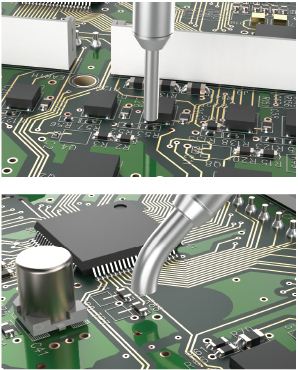
In electronics manufacturing, even a small assembly mistake can create major quality issues. A misplaced component, incorrect polarity, missing part, or wrong PCB loading can result in product failures, production delays, and increased rework costs. As electronic devices become smaller and more complex, manufacturers need reliable methods to maintain accuracy throughout the production process.
This is where Pokayoke tools for PCB assembly play an important role. Pokayoke, also known as mistake-proofing, is a manufacturing approach designed to prevent errors before they occur instead of identifying them after production.
In PCB assembly, Pokayoke techniques help operators perform tasks with greater accuracy by guiding them, restricting incorrect actions, and providing immediate feedback when an error occurs. These solutions are widely used in SMT (Surface Mount Technology), through-hole assembly, inspection processes, and final product assembly.
For electronics manufacturers, implementing proper Pokayoke systems can improve product quality, reduce wastage, and create a more controlled manufacturing environment.
What is Pokayoke in PCB Assembly?
Pokayoke is a Japanese manufacturing concept that means “mistake-proofing.” The main idea behind Pokayoke is that manufacturing processes should be designed in a way that prevents mistakes rather than depending only on operator attention.
PCB assembly involves handling multiple components, machines, feeders, PCBs, and inspection processes. Since many tasks are repetitive, mistakes can occur due to fatigue, incorrect identification, or human oversight.
A Pokayoke system identifies possible failure points and introduces preventive measures such as component verification systems, PCB positioning fixtures, barcode scanning solutions, sensor-based detection systems, assembly guides, automated inspection tools, and visual indicators.
These tools help manufacturers maintain consistent quality even during high-volume production.
Why Pokayoke Tools are Important for PCB Assembly
PCB assembly involves multiple stages where errors can impact the final product. From component placement to soldering and testing, every process requires accuracy and proper control.
Common PCB assembly errors include incorrect component placement, missing components, wrong component values, incorrect PCB orientation, wrong SMT feeder setup, soldering defects, mixed production batches, and incorrect programming.
Without proper error prevention methods, these issues may only be discovered during final testing or after the product reaches customers.
Pokayoke tools help manufacturers identify and prevent these problems during the production process itself.
Reduced Production Errors
The main purpose of Pokayoke is to prevent mistakes before they happen. By introducing verification systems and process controls, manufacturers can reduce defects and improve production accuracy.
Improved Product Quality
A controlled assembly process ensures that every PCB follows the required manufacturing standards. Pokayoke helps maintain consistent quality across different production batches.
Lower Rework and Scrap Costs
Defective PCBs require additional labour, testing, and replacement components. Error-proofing solutions reduce unnecessary rework and material wastage.
Better Operator Efficiency
Pokayoke tools support operators by providing clear guidance and verification steps, reducing dependency on manual checking.
Increased Manufacturing Reliability
Industries such as automotive electronics, medical devices, consumer electronics, and industrial equipment require high reliability. Pokayoke helps manufacturers maintain strict quality standards.
Common Pokayoke Tools Used in PCB Assembly
Different PCB assembly processes require different types of mistake-proofing solutions. Manufacturers often combine multiple Pokayoke methods depending on their production requirements.
PCB Assembly Fixtures and Jigs
PCB fixtures and jigs are commonly used Pokayoke solutions in electronics manufacturing.
These fixtures hold the PCB in the correct position during assembly, testing, or soldering operations. They prevent operators from placing the board incorrectly or performing assembly steps in the wrong orientation.
Applications include manual PCB assembly, testing stations, soldering processes, connector assembly, and inspection operations.
A properly designed fixture ensures that operators can perform tasks only in the correct manner.
Component Verification Systems
Component identification errors are among the most common problems in PCB assembly. Using an incorrect resistor, capacitor, IC, or connector can affect product performance.
Component verification systems use technologies such as barcode scanning, QR code identification, and camera-based verification to confirm whether the correct component is being used.
These systems are especially useful for manufacturers handling multiple PCB models and thousands of components.
Barcode and Traceability Systems
Modern electronics manufacturing requires complete production traceability. Barcode-based Pokayoke systems help track PCB batches, components used, operators involved, production time, and inspection results.
If a problem occurs after production, manufacturers can quickly identify the source and take corrective action.
Traceability systems can also be integrated with Manufacturing Execution Systems (MES) to improve production monitoring.
SMT Feeder Verification Systems
In SMT assembly, incorrect feeder setup can lead to wrong components being placed on multiple PCBs.
SMT feeder verification systems ensure that the correct feeder and component reel are installed according to production requirements.
These systems reduce setup mistakes and improve SMT production accuracy.
Vision Inspection Systems
Camera-based inspection systems are another important Pokayoke solution used in PCB assembly.
Automated Optical Inspection (AOI) systems identify defects such as missing components, incorrect placement, component rotation issues, and soldering problems.
AOI systems help manufacturers detect defects early and reduce the chances of faulty products moving forward in the production process.
Sensor-Based Error Detection Tools
Sensors are widely used to automatically detect mistakes during PCB assembly.
Examples include position sensors, presence sensors, weight sensors, and proximity sensors.
These systems can verify whether:
- A PCB is positioned correctly
- A component is present
- A fixture is locked properly
- A manufacturing step is completed
This reduces dependency on manual inspection.
Digital Work Instructions and Operator Guidance Systems
PCB manufacturing often involves complex assembly steps. Digital work instruction systems provide operators with step-by-step guidance, component images, process details, and verification checkpoints.
These systems are useful for manufacturers producing multiple PCB models or frequently changing production requirements.
How Pokayoke Tools Improve SMT Assembly Processes
SMT assembly requires high speed and extreme precision. Thousands of components can be placed on PCBs within a short production cycle, making error prevention essential.
Pokayoke methods improve SMT processes by ensuring correct PCB loading, accurate component feeding, proper machine setup, verified component selection, and early defect detection.
When combined with SMT machines, inspection equipment, and manufacturing software, Pokayoke creates a more reliable production workflow.
Sumitron provides electronics manufacturing solutions that support companies in improving production efficiency and maintaining quality standards in PCB assembly operations.
Role of Pokayoke in Industry 4.0 Manufacturing
Modern electronics manufacturers are moving toward smart manufacturing practices. Pokayoke plays an important role in Industry 4.0 by connecting operators, machines, and production data.
Advanced Pokayoke systems can collect information related to production errors, machine performance, operator activities, and quality trends.
This information helps manufacturers identify repeated problems and continuously improve their processes.
Smart manufacturing focuses on preventing defects rather than correcting them after production.
How to Select the Right Pokayoke Tools for PCB Assembl
Choosing the right Pokayoke solution depends on production requirements and manufacturing challenges.
- Identify Production Problems: Manufacturers should first identify where errors occur most frequently. For example, component mixing problems may require verification systems, while PCB positioning issues may require custom fixtures.
- Consider Production Volume: High-volume production may require automated verification systems, while smaller production units may benefit from manual fixtures and digital instructions.
- Check System Compatibility: Pokayoke tools should integrate properly with existing SMT machines, inspection systems, MES platforms, and ERP software.
- Focus on Long-Term Benefits: The right solution should reduce defects, improve productivity, and support future manufacturing requirements.
Sumitron’s Role in Supporting PCB Manufacturing Quality
Sumitron has been supporting the electronics manufacturing industry with advanced solutions focused on improving production efficiency and quality.
With expertise in PCB assembly technologies, manufacturing equipment, and process improvement solutions, Sumitron helps manufacturers adopt reliable production methods and improve overall manufacturing performance.
For companies looking to reduce PCB assembly errors and strengthen quality control, implementing Pokayoke tools can be an effective approach.
Future of Pokayoke in PCB Assembly
As electronic products become smaller, smarter, and more complex, manufacturing accuracy will continue to be a major priority.
Future PCB assembly environments will increasingly use AI-based inspection systems, smart sensors, automated verification technologies, connected manufacturing platforms, and real-time quality monitoring.
Pokayoke will remain an important part of electronics manufacturing because preventing errors at the source is more efficient than fixing defects later.
Frequently Asked Questions (FAQs)
Q1. What are Pokayoke tools in PCB assembly?
Ans. Pokayoke tools are mistake-proofing solutions used in PCB assembly to prevent manufacturing errors. These include fixtures, sensors, barcode systems, verification systems, and inspection technologies.
Q2. Why are Pokayoke tools important in PCB manufacturing?
Ans. Pokayoke tools help reduce assembly mistakes, improve product quality, lower rework costs, and maintain consistent production performance.
Q3. Which PCB assembly processes can use Pokayoke systems?
Ans. Pokayoke systems can be used in SMT assembly, component placement, soldering, inspection, testing, and final product assembly processes.
Q4. How do Pokayoke tools reduce PCB defects?
Ans. They prevent incorrect actions by guiding operators, verifying components, detecting missing parts, and providing alerts during production.
Q5. What is the difference between inspection and Pokayoke?
Ans. Inspection identifies defects after they occur, whereas Pokayoke focuses on preventing mistakes before they happen.
Q6. Can small PCB manufacturers use Pokayoke tools?
Ans. Yes, small manufacturers can use simple Pokayoke methods such as fixtures, visual guides, and barcode verification systems to improve accuracy.
Q7. How do barcode systems improve PCB assembly quality?
Ans. Barcode systems help verify components, track production batches, and maintain complete traceability throughout the manufacturing process.
Q8. Are Pokayoke tools useful for SMT assembly lines?
Ans. Yes, SMT assembly benefits from Pokayoke solutions such as feeder verification systems, component identification systems, and automated inspection tools.
Q9. How can manufacturers implement Pokayoke in existing PCB production lines?
Ans. Manufacturers can identify common production errors and introduce suitable solutions such as fixtures, sensors, software verification, or inspection systems.
Q10. How do Pokayoke tools improve manufacturing efficiency?
Ans. Pokayoke tools reduce defects, rework, and downtime, helping manufacturers achieve better productivity and reliable PCB assembly operations.
Conclusion
Pokayoke tools for PCB assembly play a vital role in improving manufacturing accuracy by preventing errors before they occur. From PCB fixtures and barcode verification to sensor-based detection and automated inspection systems, these solutions help manufacturers reduce defects, lower rework costs, and maintain consistent product quality. As electronics manufacturing continues to advance with Industry 4.0 technologies, implementing the right Pokayoke tools supports greater efficiency, reliable production, and long-term operational success. Choosing suitable error-proofing solutions is a practical step toward achieving higher quality standards and more dependable PCB assembly processes.
Read Also This Blog