
In today’s rapidly evolving electronics industry, precision, consistency, and production efficiency are no longer optional—they are essential. As electronic devices become more compact, complex, and performance-driven, manufacturers must adopt advanced technologies that ensure high-quality PCB assembly while meeting increasing production demands.
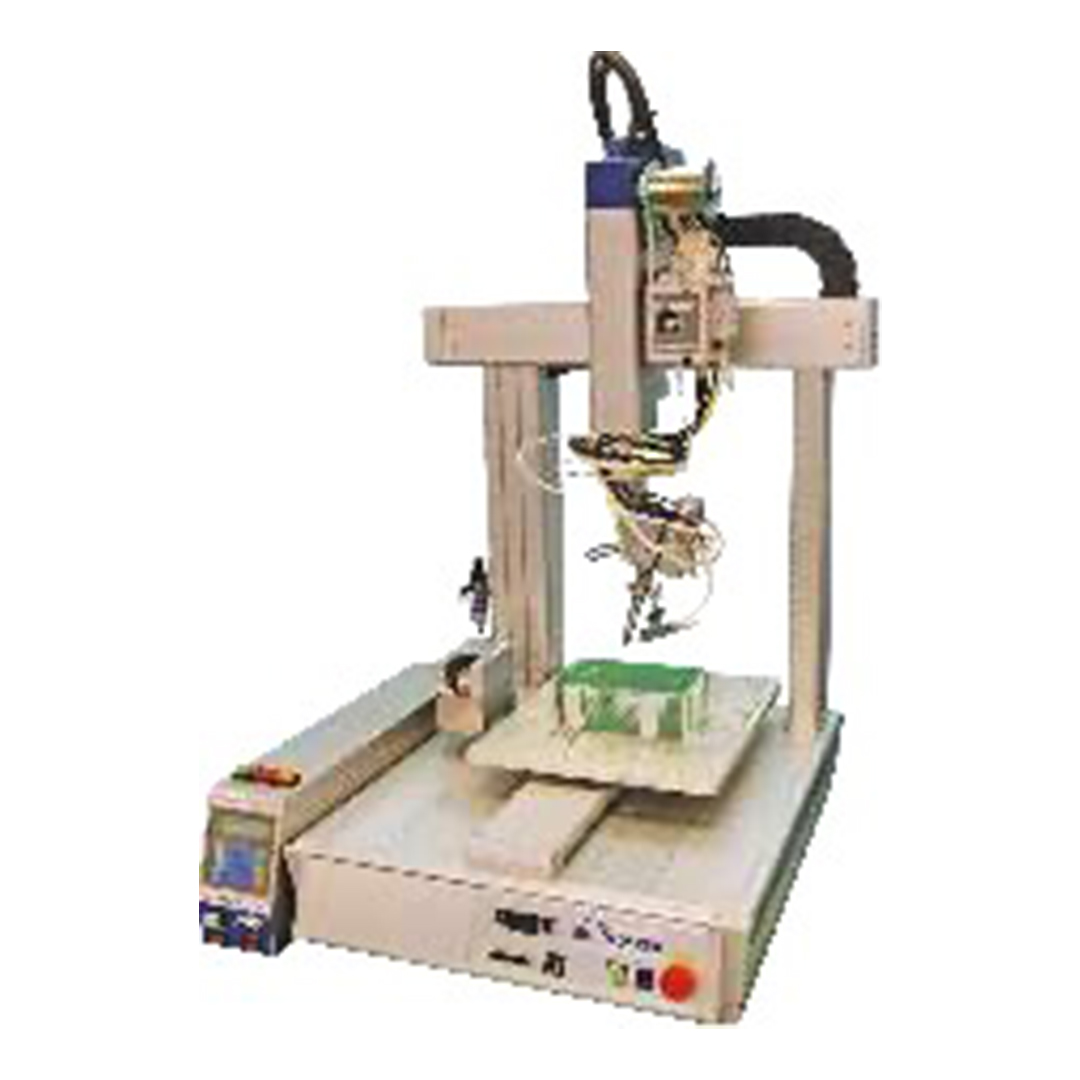
At Sumitron, we have spent decades helping electronics manufacturers optimize their production lines with cutting-edge PCB assembly equipment and automation solutions. One of the most transformative innovations in modern electronics manufacturing is the Automatic Soldering Machine for PCB Assembly.
Whether you’re an OEM, EMS provider, product developer, or manufacturing engineer, understanding the role of automated soldering can help you improve product quality, reduce operational costs, and stay competitive in today’s market.
This comprehensive guide explores everything you need to know about automatic soldering machines, their benefits, applications, and their growing importance in modern PCB manufacturing.
The Growing Challenges of PCB Assembly
Traditional soldering methods often struggle to meet these requirements due to:
- Increasing component density
- Miniaturized PCB designs
- Tight manufacturing tolerances
- High-volume production demands
- Rising labor costs
- Quality consistency challenges
As a result, manufacturers are increasingly shifting toward automated PCB soldering solutions that deliver repeatable, accurate, and high-quality results.
1. The Hidden Cost of Manual Soldering
Many manufacturers underestimate the true cost of manual soldering operations.
While manual soldering may seem economical initially, it often introduces hidden expenses that impact productivity and profitability.
2. Quality Inconsistencies
Even highly skilled operators can produce variations in solder joints. Differences in temperature control, solder application, and handling can lead to inconsistent product quality.
3. Human Errors
Manual operations are prone to mistakes such as:
- Cold solder joints
- Excess solder deposition
- Insufficient wetting
- Bridging defects
- Component damage
These defects often result in expensive rework and field failures.
4. Production Bottlenecks
Manual soldering limits production speed and becomes a major bottleneck as order volumes increase.
5. Scalability Challenges
As production grows, relying solely on skilled operators becomes difficult and expensive. Automation enables manufacturers to scale efficiently without compromising quality.
What Is an Automatic Soldering Machine for PCB Assembly?
An Automatic Soldering Machine for PCB Assembly is an advanced manufacturing system designed to automate the soldering process with high precision and repeatability.
These machines use programmable controls, robotic movement systems, temperature management technology, and automated material handling mechanisms to create reliable solder joints across PCB assemblies.
Unlike manual processes, automated systems maintain consistent quality regardless of production volume.
How Does It Work?
An automatic soldering machine follows a predefined program to:
- Identify soldering locations
- Control solder feed rates
- Maintain precise temperatures
- Apply solder accurately
- Monitor process consistency
- Reduce operator intervention
The result is a highly repeatable soldering process that minimizes defects and improves productivity.
Key Components
Modern automatic soldering machines typically include:
- Robotic motion systems
- Precision soldering heads
- Temperature control modules
- Vision inspection systems
- Programmable controllers
- Flux application units
- Conveyor systems
- Process monitoring software
Inside the Automated PCB Soldering Workflow
Understanding the PCB assembly process helps illustrate why automation has become essential.
- PCB Loading: Bare PCBs are automatically loaded onto the production line. Advanced systems integrate seamlessly with automated conveyors to support continuous manufacturing.
- Component Placement: Components are positioned using SMT assembly equipment or through-hole insertion systems. Accurate placement is critical for achieving reliable solder joints.
- Flux Application: Flux is applied to improve solder wetting and enhance bond formation. Automated fluxing systems ensure precise and uniform coverage.
- Soldering Process: The automatic soldering machine performs programmed soldering operations using precisely controlled parameters such as temperature, dwell time, solder volume, feed rate, and positioning accuracy. This level of control ensures consistent solder joint quality, improved reliability, and uniform results across every PCB.
- Inspection and Quality Control: Modern production lines incorporate advanced inspection technologies such as AOI (Automated Optical Inspection), SPI (Solder Paste Inspection), and X-ray Inspection to monitor solder quality and detect defects at various stages of the manufacturing process. These systems help ensure product reliability by identifying issues before components move to final assembly.
Types of Automatic Soldering Machines Used in PCB Assembly
Different PCB applications require different soldering technologies.
Wave Soldering Machines
Wave soldering is commonly used for through-hole soldering applications.
The PCB passes over a molten solder wave, creating reliable connections between components and the board.
Advantages
- High throughput
- Cost-effective for large volumes
- Excellent for through-hole assemblies
Selective Soldering Machines
Selective soldering focuses solder application only where needed.
This technology is particularly useful for mixed-technology boards that contain both SMT and through-hole components.
Advantages
- High precision
- Reduced thermal stress
- Improved solder quality
Robotic Soldering Systems
Robotic soldering systems use programmable robotic arms to perform complex soldering operations.
Advantages
- Exceptional repeatability
- Flexible programming
- Suitable for intricate assemblies
Laser Soldering Machines
Laser soldering uses concentrated laser energy to create highly precise solder joints.
Advantages
- Minimal thermal impact
- High accuracy
- Ideal for miniaturized electronics
Inline Automated Soldering Solutions
Inline systems integrate directly into automated production lines.
Advantages
- Continuous operation
- Higher productivity
- Reduced handling time
Why Electronics Manufacturers Are Moving Toward Automation
The shift toward automation is driven by measurable business benefits.
- Consistent Quality: Automation eliminates variability and delivers repeatable soldering results.
- Enhanced Precision: Modern machines can solder extremely small and densely packed components with exceptional accuracy.
- Increased Productivity: Automated production lines significantly outperform manual processes in terms of speed and throughput.
- Reduced Rework: Fewer defects mean lower repair costs and faster production cycles.
- Lower Operational Costs: Although automation requires an initial investment, long-term savings are substantial due to reduced labor requirements and improved efficiency.
- Better Scalability: Manufacturers can increase production volumes without proportionally increasing workforce requirements.
Key Features to Look for in an Automatic Soldering Machine
Choosing the right solution requires careful evaluation.
- High Positioning Accuracy: Precision is essential for modern PCB designs.
- Advanced Temperature Control: Consistent temperature management prevents defects and protects sensitive components.
- Repeatability: Reliable performance across thousands of production cycles is critical.
- Software Integration: Modern systems should offer intuitive programming and process monitoring capabilities.
- Industry 4.0 Readiness: Smart manufacturing capabilities provide real-time production insights and improved process control.
- Flexible Configuration: Machines should accommodate various board sizes, component types, and production requirements.
How Automatic Soldering Improves PCB Quality and Reliability
Quality remains one of the strongest arguments for automation.
- Defect Reduction: Automated systems significantly reduce common soldering defects such as cold joints, solder bridges, insufficient solder, and component damage, resulting in improved product quality and manufacturing consistency.
- Stronger Solder Joints: Controlled process parameters improve mechanical strength and electrical conductivity.
- Compliance with Industry Standards: Automated processes support adherence to stringent quality requirements across regulated industries.
- Longer Product Lifespan: Reliable solder joints contribute directly to improved product durability and performance.
- Applications Across Industries: Automatic soldering technology supports a wide range of industries.
- Consumer Electronics: Smartphones, wearables, home appliances, and smart devices require high-volume, high-precision PCB assembly.
- Automotive Electronics: Modern vehicles rely heavily on electronic control units, sensors, and safety systems.
- Medical Devices: Medical electronics demand exceptional reliability and manufacturing consistency.
- Industrial Automation: Factories increasingly depend on sophisticated control systems and embedded electronics.
- Telecommunications: Networking equipment and communication infrastructure require dependable PCB manufacturing.
- Aerospace and Defense: Mission-critical applications demand the highest levels of quality and traceability.
How Sumitron Delivers Precision PCB Assembly Solutions
At Sumitron, we understand that successful PCB assembly requires more than just equipment—it requires expertise, process knowledge, and long-term partnership.
For nearly four decades, we have been supporting manufacturers with advanced PCB assembly solutions designed to improve quality, productivity, and operational efficiency.
- Industry Expertise: Our team works closely with customers to identify the most suitable technologies for their production requirements.
- Advanced Manufacturing Solutions: We provide a comprehensive range of PCB assembly equipment, soldering systems, inspection technologies, and process automation solutions.
- Quality-Focused Approach: Every solution is selected and implemented with a focus on process reliability and product quality.
- Customer-Centric Support: From consultation and installation to training and after-sales service, we remain committed to helping customers achieve manufacturing excellence.
Why Choose Sumitron?
Manufacturers across India trust Sumitron because we offer:
- ✔ Decades of electronics manufacturing expertise
- ✔ Proven PCB assembly technology solutions
- ✔ Advanced soldering and inspection systems
- ✔ Reliable technical support
- ✔ Customized automation recommendations
- ✔ Industry-leading quality standards
- ✔ Long-term partnership approach
Our goal is simple: help customers build better products with greater efficiency and confidence.
Future Trends in Automated PCB Assembly
The future of electronics manufacturing is becoming increasingly intelligent and connected.
- AI-Driven Inspection: Artificial intelligence is improving defect detection and process optimization.
- Smart Factories: Connected manufacturing systems enable real-time monitoring and decision-making.
- Predictive Maintenance: Advanced analytics help prevent equipment failures before they occur.
- Robotics Integration: Collaborative robotics continue to expand automation capabilities.
- Industry 4.0 Advancements: Digital manufacturing technologies are creating more agile and efficient production environments.
Manufacturers investing in these technologies today will be better positioned for tomorrow’s competitive landscape.
Frequently Asked Questions (FAQs)
Q1: What is an automatic soldering machine used for?
An automatic soldering machine automates PCB soldering operations to improve quality, consistency, and production efficiency.
Q2: Is automated soldering better than manual soldering?
Yes. Automated soldering offers greater precision, repeatability, productivity, and defect reduction compared to manual methods.
Q3: Which industries use automatic soldering machines?
Consumer electronics, automotive, medical, telecommunications, aerospace, defense, and industrial automation industries widely use automated soldering systems.
Q4: What is the difference between wave soldering and selective soldering?
Wave soldering solders entire board sections simultaneously, while selective soldering targets specific joints with greater precision.
Q5: Can automatic soldering machines handle SMT and through-hole components?
Yes. Different machine types are available to support SMT assembly, through-hole soldering, or mixed-technology assemblies.
Q6: How does automation improve PCB quality?
Automation reduces human error, ensures consistent process control, and produces stronger, more reliable solder joints.
Q7: What factors should be considered when selecting a soldering machine?
Key factors include accuracy, temperature control, throughput, flexibility, software capabilities, and integration with existing production lines.
Q8: Is automated soldering suitable for high-volume manufacturing?
Absolutely. Automated soldering systems are specifically designed to support high-volume, high-quality production environments.
Conclusion
As electronics become more sophisticated and production demands continue to rise, manufacturers can no longer rely solely on traditional soldering methods. An Automatic Soldering Machine for PCB Assembly provides the precision, consistency, and scalability required for modern electronics manufacturing.
From improved product quality and reduced defects to higher productivity and lower operational costs, automated PCB soldering has become a strategic investment for forward-thinking manufacturers.
At Sumitron, we remain committed to helping businesses embrace advanced PCB assembly technologies that drive manufacturing excellence. With our expertise, industry knowledge, and comprehensive automation solutions, we help customers build reliable products, optimize production processes, and stay ahead in an increasingly competitive market.
Ready to Upgrade Your PCB Assembly Process?
Partner with Sumitron to discover advanced automatic soldering solutions tailored to your manufacturing requirements. Contact our experts today and take the next step toward smarter, more efficient electronics manufacturing.
Read Also This Blog