
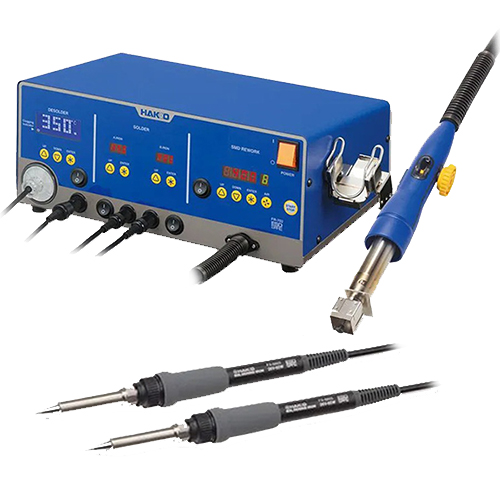
Soldering and desoldering are core processes in electronics manufacturing, repair and maintenance. Whether you work in a manufacturing unit, a service centre, or an electronics lab, reliable soldering and desoldering systems help you achieve precise assembly and safe removal of components. This blog explains these systems, their importance, how they work, and why investing in quality tools matters.
What Are Soldering and Desoldering Systems
Soldering is the technique of joining two or more metal surfaces by melting a filler metal, called solder, which solidifies to form a strong electrical and mechanical bond. It is widely used to connect components on printed circuit boards, wire joints, and metal assemblies. The process requires controlled heat and proper tools to ensure lasting connections.
Desoldering is the reverse process. It involves removing solder and components from a board or assembly, usually for repair, replacement, or rework. Efficient desoldering allows technicians to correct mistakes, salvage parts, and modify circuits with minimal damage.
A combined soldering and desoldering system integrates both functions into one unit, giving professionals flexibility and precision for a wide range of tasks.
Why These Systems Are Essential
Modern electronics demand accuracy and repeatability. Traditional soldering irons may lack temperature control and precision, especially when working with sensitive or miniature components. Soldering and desoldering systems, often called stations, go beyond simple irons by offering:
- Accurate temperature control for consistent results
- Interchangeable tips for varied applications
- Integrated desoldering tools like vacuum pumps or hot air modules
- Improved safety features such as auto shut off and thermal stability
These advantages make soldering stations ideal for production lines, repair benches, research labs, and training centres.
Key Components of a System
A typical soldering and desoldering system includes several important parts:
- Soldering Iron or Pencil: A hand tool with a heated tip that melts solder, allowing it to flow into joints. In stations, the temperature is adjustable, which increases reliability and reduces risk of damage to components
- Desoldering Tools: Desoldering can be done with pumps, solder wick or specialized vacuum systems. Advanced stations may use hot air or suction tools to remove solder cleanly from complex assemblies.
- Temperature Controls: Digital or analogue controllers let you set and monitor the heat applied, which is vital for delicate components and varying solder types.
- Accessories: Tips of different shapes and sizes, cleaning sponges, flux and maintenance tools all support smoother workflow and better outcomes.
Benefits of Quality Systems
- Enhanced Precision: Controlled heat means better wetting of solder and reduced risk of joint failure. This is crucial for high density boards and surface mount devices.
- Faster Production and Repair: Integrated desoldering features reduce downtime during rework and speed up tasks like component replacement.
- Reduced Damage Risk: Quality stations prevent overheating and protect sensitive parts.
- Extended Tool Life: Stable temperature and robust build quality mean less wear and tear on tips and heating elements
Practical Uses Across Industries
Soldering and desoldering systems have a wide range of applications:
- Electronics Assembly: From consumer gadgets to industrial controls, effective soldering ensures reliable connections.
- Maintenance and Repair: Technicians use desoldering to fix faults and replace components without harming the board.
- Automotive and Telecom: In complex systems where reliability is key, controlled soldering improves performance and longevity.
- Training and Education: Students and trainees learn essential skills using real stations, preparing them for industry roles.
Conclusion
Investing in a quality soldering and desoldering system is essential for anyone serious about electronics work. These systems deliver precision, flexibility and safety that simple tools cannot match. Whether you are building new assemblies or repairing existing units, the right station makes your work easier and more reliable. Keep following for expert tips and recommendations.
Read Also This Blog